

Caboolture: The ANZAC Roots Behind Queensland’s Busiest Suburb
Did you know that Caboolture’s ANZAC story isn’t just marked by its war memorial—but by the railway line that still runs through the suburb today?
In the early 20th century, that line formed part of a critical transport corridor through South East Queensland—moving produce out, and at times, troops through—linking Caboolture to Brisbane and beyond.
Historical records archived via Trove document ANZAC Day commemorations in Caboolture dating back to the 1920s, reflecting the district’s long-standing connection to service and remembrance.
That combination—land and movement—would come to define the area.
At the time, Caboolture was a working district—dairy farms and small agricultural holdings supplying Brisbane, with produce moving along the same rail corridor that connected the town to the rest of the state.
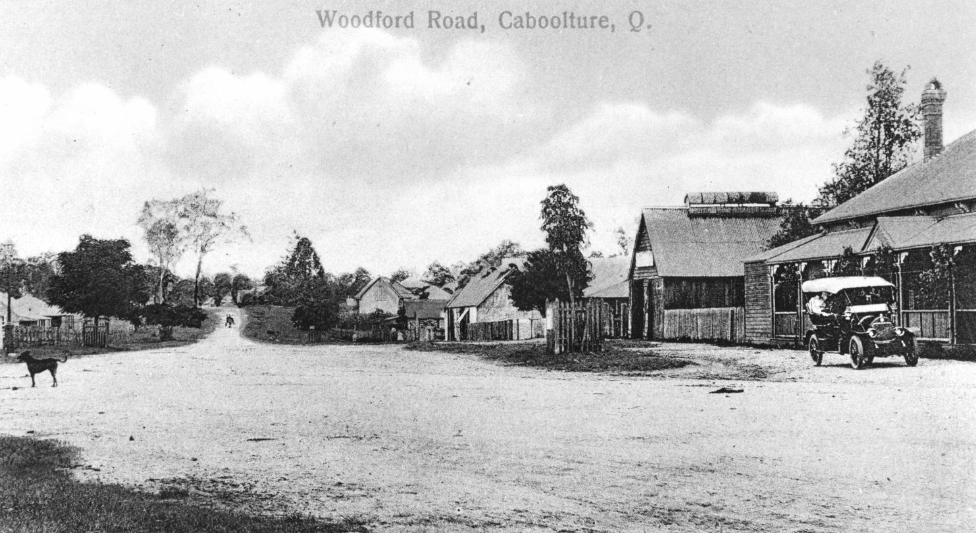
Residents lined the platform, handing fruit and cigarettes through carriage windows. By 1916, entire stretches of farms had lost their young men. The same farms that fed Brisbane quietly fed a war.
Local notices recorded the growing toll on families across the district.
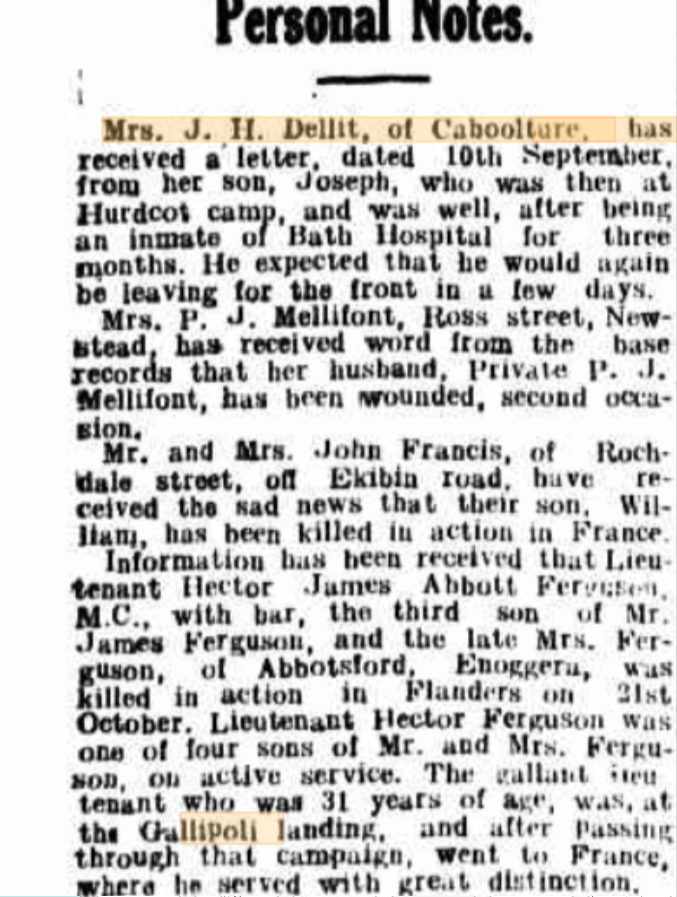
Those brief lines reflected a reality across Caboolture and surrounding districts, where farming families lost sons, brothers and workers to the war. The absence was felt not just in homes, but across the land — in short-handed properties and a community adjusting to life without a generation of young men.
In the decades after World War I and World War II, Queensland used a range of settlement and repatriation measures to help returned servicemen rebuild their lives on the land. In districts like Caboolture and nearby areas —then a rural centre positioned along a key rail corridor—those efforts formed part of the broader post-war landscape across Queensland.
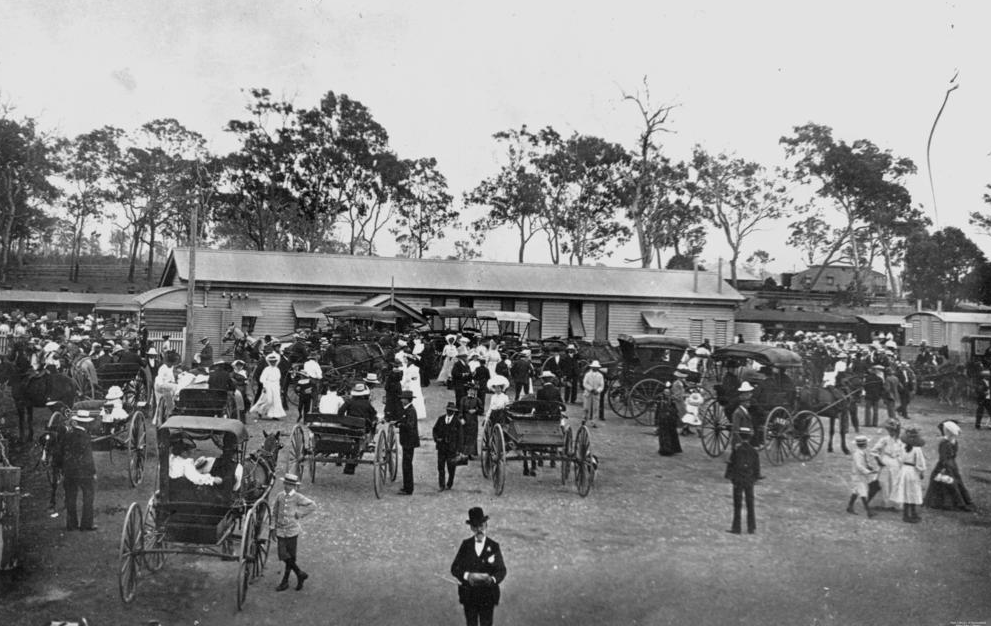

By the mid-1900s, Caboolture had established itself as a key dairy-producing district in the region, with farms supplying Brisbane and surrounding areas.
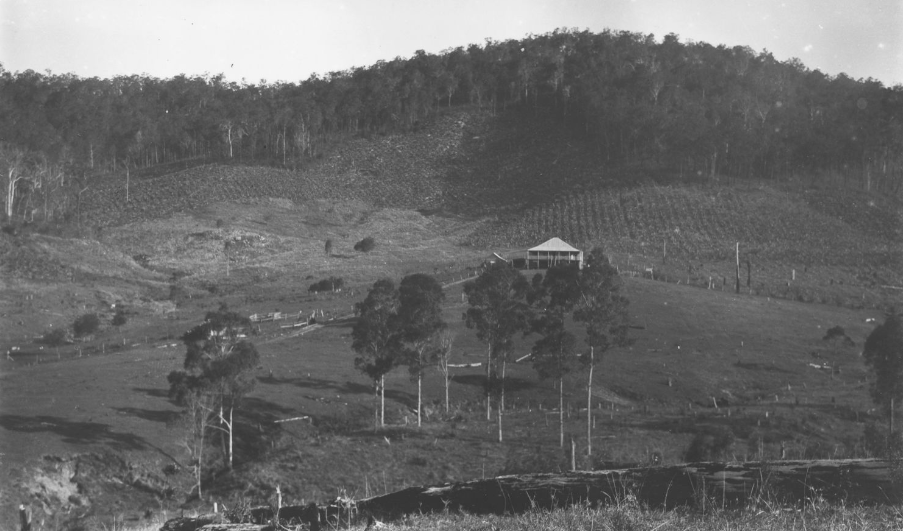
This period coincided with the district’s expansion as a farming centre, with dairy farms and small agricultural holdings supplying Brisbane’s local economy through the early to mid-20th century, many of them as part of a scheme to grant veterans land for farming as a way of contributing to the agricultural development in the area.
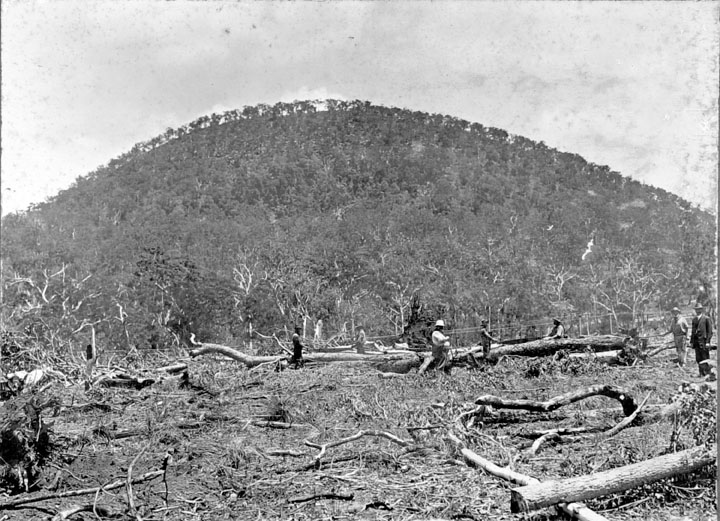
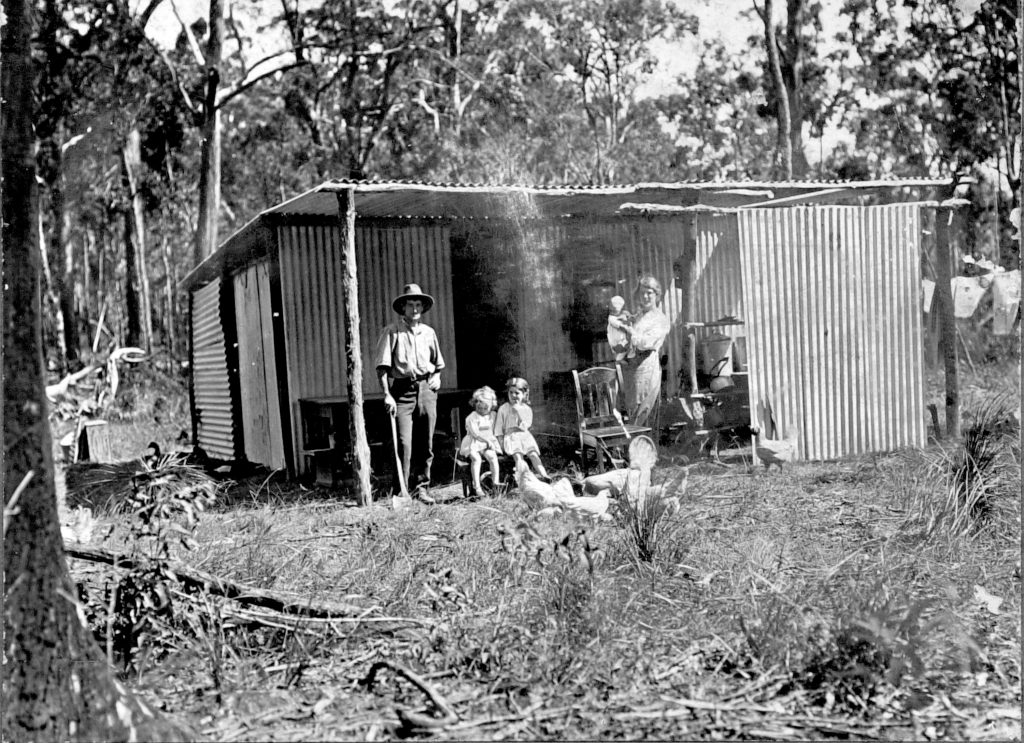
Several training units were active throughout Caboolture and the Sunshine Coast region in WW1, as a way of integrating the military with the local community.
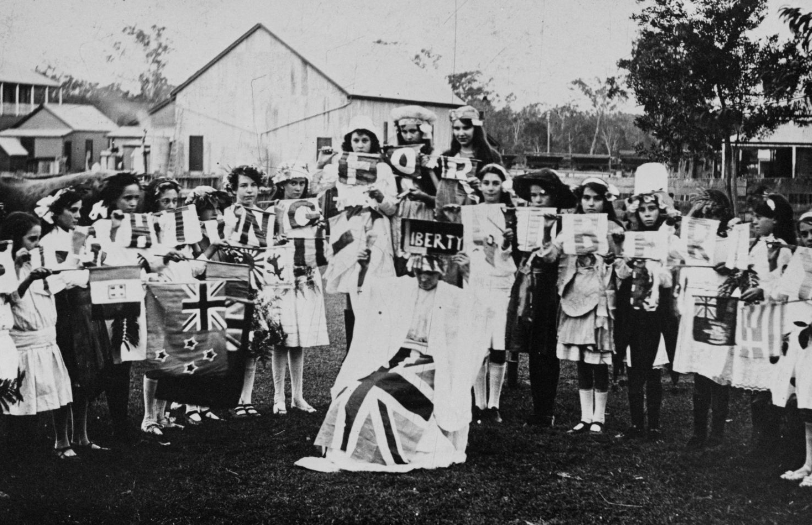
During the Second World War, troops helped with wartime infrastructure efforts, a reflection of the broader role regional corridors played in moving men and materials.
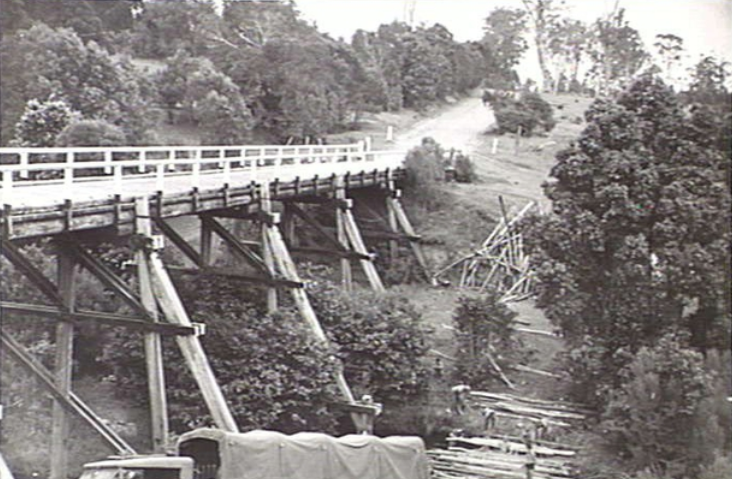
The area’s position on the North Coast rail line also meant it functioned as a transport point for produce and people moving between Brisbane and regional Queensland.
Today, that same corridor underpins one of Queensland’s busiest housing markets. Caboolture consistently ranks among the highest-volume suburbs in the state for house sales, according to InfoTrack.
The connection isn’t symbolic—it’s structural.
A Market Defined by Movement
Caboolture now sits at the centre of one of the most active property corridors in Queensland.
Recent indicators point to:
- Median house prices in Caboolture generally sitting below Brisbane’s, in the mid-$600,000s to low-$700,000s range, based on PropTrack estimates
- A sustained pricing gap supporting demand from value-driven buyers
- Strong participation from first-home buyers and investors
What was once a practical settlement location—defined by land availability and rail access—has become a high-turnover residential market driven by those same fundamentals.
From the post-war period through to the late 20th century, Caboolture’s gradual shift from a rural service town to a commuter-linked suburb accelerated as road and rail access improved, setting the foundation for the housing turnover now seen in the area.
Top 10 Sales in Caboolture (Last 90 Days)
Includes two undisclosed sales.
Large land continues to define Caboolture’s top end, with nine of the ten highest recent sales sitting on blocks above 3,000sqm.
- 35 Greenleaf Court, Caboolture (3,052sqm) — 5 bed / 3 bath — Price undisclosed — Sold by Melissa Brooker
- 59 Harrow Court, Caboolture (8,000sqm) — 5 bed / 4 bath — $1,950,000 — Sold by Mary-Jane Matthews
- 197 Old Gympie Road, Caboolture (3,085sqm) — 4 bed / 3 bath — $1,900,000 — Sold by Adam Charlton & Adil Gujarati
- 38 Murrimbah Drive, Caboolture (3,878sqm) — 4 bed / 2 bath — $1,850,000 — Sold by Kathy Sweeney & Macauley Parker-Burton
- 10 Harrow Court, Caboolture (3,179sqm) — 5 bed / 3 bath — $1,800,000 — Sold by Tiffany Warren & Adam Cini
- 21–23 Urban Road, Caboolture (3,000sqm) — 5 bed / 2 bath — $1,775,000 — Sold by Adam Charlton
- 3 Greenleaf Court, Caboolture (3,051sqm) — 4 bed / 3 bath — $1,700,000 — Sold by Frank Pike
- 10–14 Elva Street, Caboolture (5,454sqm) — 3 bed / 2 bath — $1,700,000 — Sold by Frank Pike
- 365 Markwell Road, Caboolture (4,624sqm) — 4 bed / 2 bath — $1,560,000 — Sold by Mick O’Keefe
- 26 Simone Court, Caboolture (3,050sqm) — 4 bed / 2 bath — Price undisclosed — Sold by Melissa Brooker
Land, Then and Now
The clearest link between Caboolture’s past and its current market is physical.
Earlier growth in the district was shaped by larger agricultural holdings and incremental subdivision. Much of that early farmland has since been subdivided, but the way it was originally held—larger parcels shaped by agricultural use rather than uniform planning—still influences how parts of Caboolture are structured today.
That pattern still shows up today—not uniformly, but in pockets—alongside newer masterplanned estates.
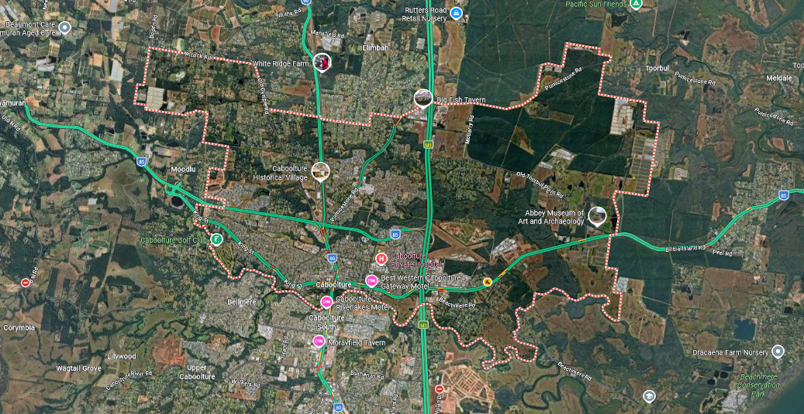
Satellite imagery highlights the shift—larger, less uniform parcels in older parts of Caboolture contrasted with the tightly configured lots of newer estates such as Central Springs.
Larger Blocks: Established Caboolture
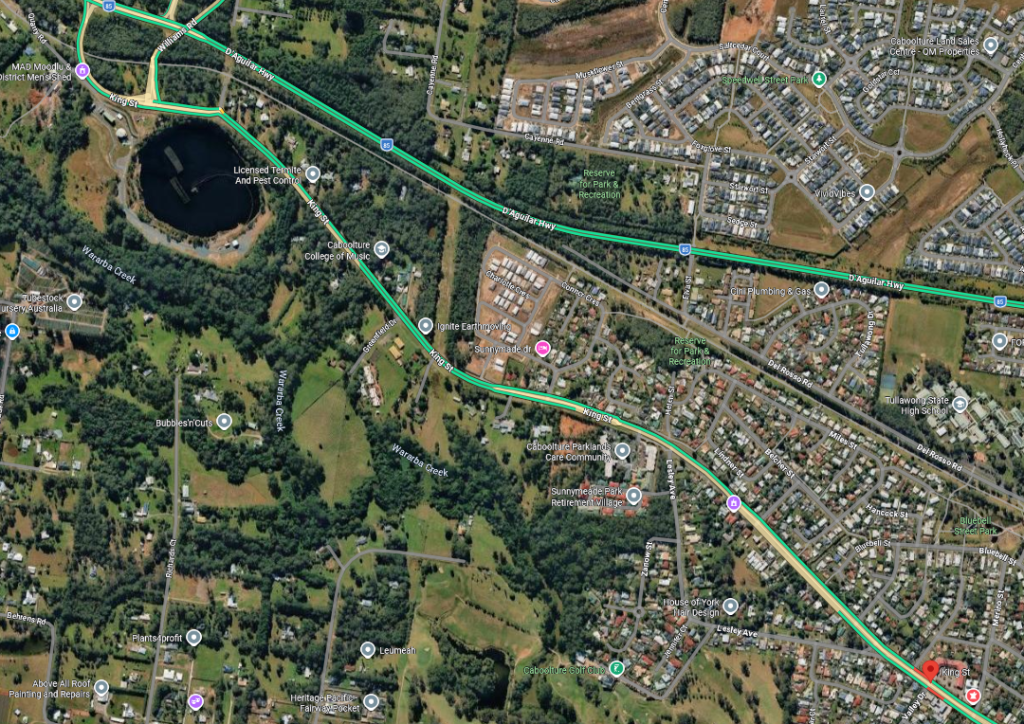
In older parts of Caboolture, lot sizes reflect decades of incremental subdivision rather than a single planned release. While some areas are now fully suburbanised, others retain larger, more flexible parcels.
At the top end, 59 Harrow Court, Caboolture, a 5-bedroom, 4-bathroom home on an 8,000sqm block, sold for $1,950,000 through Mary-Jane Matthews, illustrating a clear premium attached to scale in recent results.
That pattern is also evident in 35 Greenleaf Court, Caboolture, a 5-bedroom home on a 3,052sqm block, sold through Melissa Brooker, alongside 365 Markwell Road, Caboolture, a 4-bedroom home on a 4,624sqm block that sold for $1,560,000 through Mick O’Keefe—reinforcing the concentration of high-value activity on larger land holdings.
Smaller Lots: Masterplanned Estates
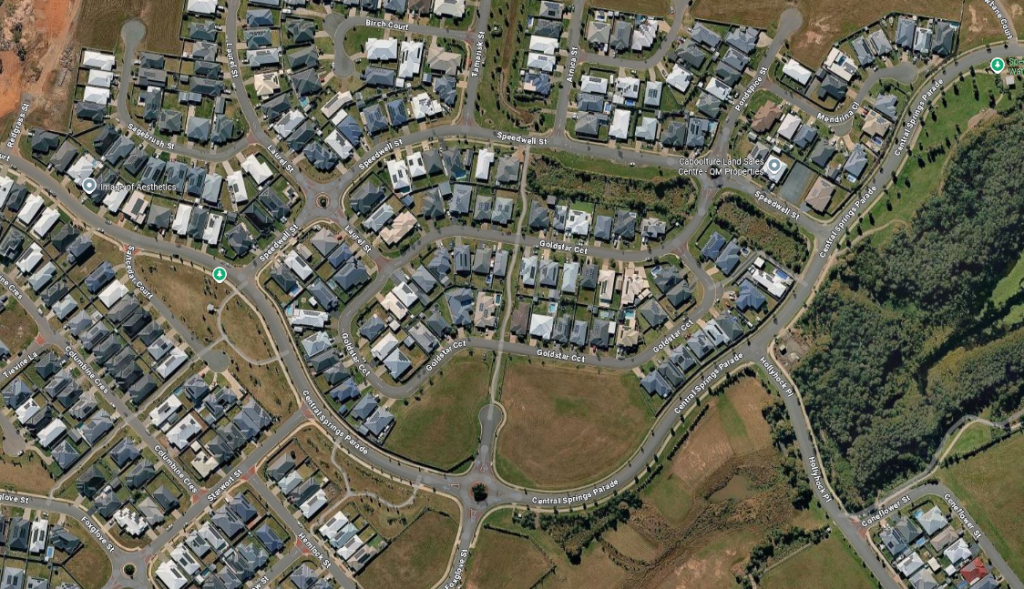
Newer estates such as Central Springs reflect a different model—tighter lots, consistent layouts and product aimed at mainstream demand.
These homes drive much of Caboolture’s transaction volume. However, within the same dataset, the number of sub-1,000sqm results at the top end remains limited, highlighting the contrast between volume-driven estates and the larger land holdings commanding higher price points.
The contrast is not just visual—it is reflected directly in the results.
Nine of the ten recent sales occurred on blocks above 3,000sqm, with larger holdings consistently setting the highest price points.
Why Demand Has Accelerated
Caboolture’s rise is being driven by a combination of affordability, scale and pipeline.
Median house prices remain below Brisbane’s, helping sustain demand across both owner-occupiers and investors, while transaction volumes continue to rank among the highest in the state, according to InfoTrack.
“Caboolture and the wider Moreton Bay region are attracting strong interest because they offer relative affordability, larger blocks, and access to key transport and employment hubs,” said InfoTrack Chief Operating Officer Lee Bailie.
“The area is also benefiting from ongoing Queensland Government investment in critical infrastructure… giving buyers confidence in the long-term potential of the region.”
Caboolture’s position on the rail line continues to underpin accessibility, while ongoing development across the Caboolture West growth corridor is expected to support long-term supply.
A Different Kind of Legacy
Caboolture’s ANZAC relevance is not always visible—but it is embedded in the district’s evolution.
Caboolture’s ANZAC relevance is not expressed through a single site, but through the district’s evolution—from a farming centre shaped by early settlement and transport access to a suburb defined by subdivision, accessibility and housing turnover.
The difference now is scale—what began in a district shaped by service and settlement has evolved into one of Queensland’s busiest property markets.
Published 23-April-2026
Disclaimer: This article is based on publicly available property transaction data and general market information. While care has been taken to ensure accuracy at the time of publication, figures may change as additional sales are recorded or updated. This content is intended for general information only and does not constitute financial or investment advice. Readers should undertake their own research and seek professional advice before making any property decisions.
