


What Sets Samford Apart Isn’t Space, But Tempo
Samford’s appeal is often framed in terms of distance — close enough to Brisbane to commute, far enough to feel removed. But for those who live here, that explanation falls short. What defines Samford is not how far it sits from the city, but how it moves on its own terms.
The Village vs the Valley: Where Samford’s Tempo Is Set
Samford’s tempo isn’t branding — it’s geography. Samford Village, home to roughly 800 residents, operates as a compact civic core. Main Street’s cafés, artisan shops, John Scott Park, the school, showgrounds and everyday services sit within easy walking distance, creating a daily rhythm where errands overlap with conversation. Noticeboards fill with flyers for events and volunteer groups, and familiarity shapes the pace more than efficiency.
Beyond the Village boundary, Samford Valley opens into broader rural living. Spanning roughly 20 square kilometres and home to around 3,200 people, the Valley is defined by acreage properties, rolling paddocks and bushland. Space, rather than density, sets the rhythm here. Locals move between Village and Valley routinely, adjusting their pace as they do. The change isn’t marked by signage, but by feel — the way time stretches once the streets widen and the landscape opens.
Markets, Rituals and the Rhythm of Community Life

That tempo becomes most visible through repetition. The Samford Valley Markets, held on the second Saturday of every month from 7am to noon between February and November, are not a novelty event but a fixture. A twilight Christmas market in December extends the tradition into the evening. Set around the grounds of St Paul’s Anglican Church on Mount Samson Road, the markets typically host 40 to 50 stalls, offering fresh produce, handmade goods, artisanal food and coffee. For many locals, the markets function less as a shopping trip than a regular social checkpoint.
The annual Samford Show plays a similar role on a larger scale. Scheduled for Saturday 11 and Sunday 12 July 2026, with gates opening at 8am and events commencing shortly after, the Show blends livestock competitions, woodchopping, equestrian displays, classic cars, side-show alley, food stalls and family entertainment. Rooted in agricultural tradition, it continues to act as a cultural anchor, drawing together residents from across the Village, Valley and surrounding districts.
These events don’t interrupt daily life — they help structure it.
What recent sales reveal about Samford’s lifestyle market
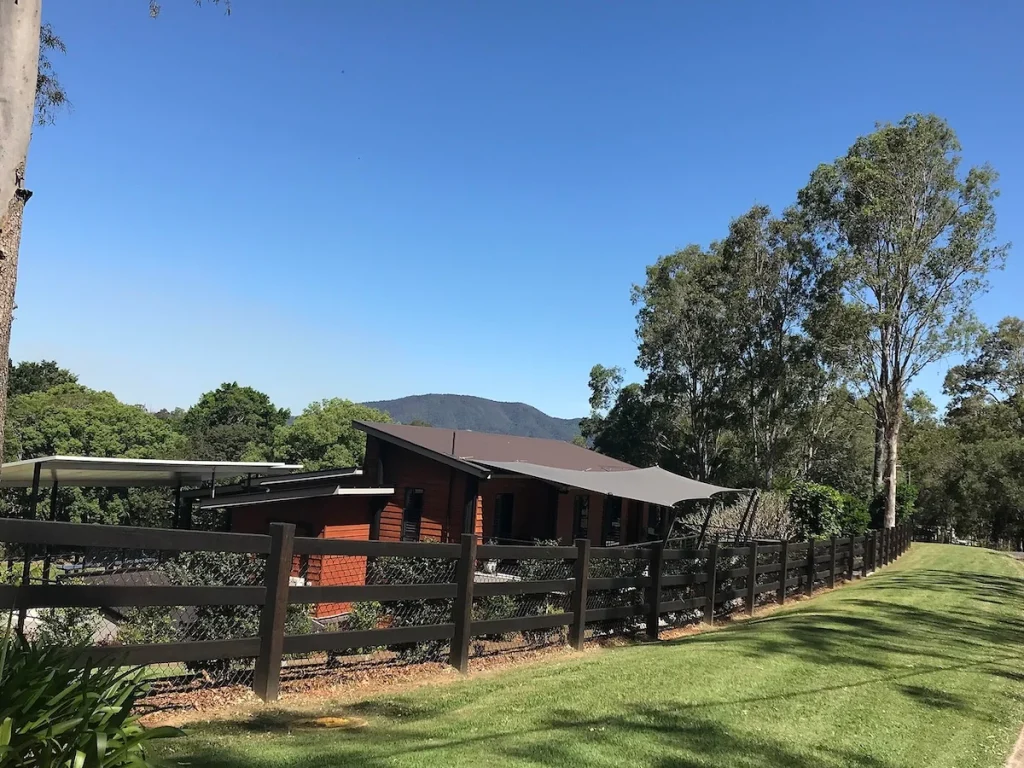


The property market in and around Samford tends to reward the same qualities the village identity depends on: space, quiet, and room to live at a slower tempo. The most recent sales in the Oct 2025–Jan 2026 window on realestate.com.au’s sold results for the Samford district skew heavily toward high-value homes on larger lots, signalling demand for an everyday quality of life built around breathing room rather than sheer proximity.
- 52 Sky Drive, Highvale — $2,400,000 — Sold 22 Dec 2025
- 15 Campbell Court, Samford Valley — $2,900,000 — Sold 30 Nov 2025
- 50 Reiners Road, Highvale — $2,075,000 — Sold 30 Nov 2025
- 4 Alpine Drive, Draper — $2,300,000 — Sold 29 Nov 2025
- 306 Basin Road, Samsonvale — $1,690,000 — Sold 26 Nov 2025
- 120 Basin Road, Samsonvale — $1,990,000 — Sold 21 Nov 2025
- 57 Burton Lane, Samford Valley — $1,670,000 — Sold 21 Nov 2025
- 198 Old Mount Samson Road, Closeburn — $1,940,000 — Sold 20 Nov 2025
- 100 Hawkins Road, Kobble Creek — $1,425,000 — Sold 19 Nov 2025
- 26 Wentworth Avenue, Mount Nebo — $870,000 — Sold 19 Nov 2025
Viewed alongside Samford’s daily rhythm, recent sales suggest buyers are not simply paying for land size or proximity to Brisbane. They are buying into a way of living that feels settled and deliberate. Demand has consistently centred on homes that align with Samford’s established scale, whether within the Village or across the Valley, rather than on density or rapid turnover.
Protecting the Pace: Development, Scale and Community Pushback
That preference has shaped how the community responds to change. One of the most prominent planning disputes in recent years has centred on a proposed mixed-use development at the entrance to Samford Village (DA/2022/4057). Lodged in October 2022, the application proposed a multi-storey complex including retail, offices, cafés, medical services and parking.
Residents and the Samford & Districts Progress and Protection Association argued the scale would overwhelm the Village gateway and disrupt its low-rise, rural character. More than 300 public submissions were lodged, echoing earlier community opposition that had previously stopped a Woolworths proposal and forced major revisions to another hotel development.
On 31 March 2025, the Queensland Planning and Environment Court ruled that proposed design amendments were not “minor” under planning law, citing their material impact on scale and streetscape. The decision effectively required the developer to proceed with the original application or submit a new one, triggering fresh consultation. The dispute continues, with community fundraising underway for legal costs and ongoing debate over how growth should be accommodated without eroding Samford’s character.
Arrival Matters: Connectivity Without Urgency

.JPG)
.JPG?uselang=en#Licensing)
Connectivity in Samford has evolved, but it mirrors the community’s broader approach to pace — connected, yet measured. The Samford to Ferny Grove Cycle Link was designed to provide a safer, more direct active-transport connection between Samford Village and the Ferny Grove rail network.
Stage 1, completed several years ago, delivered approximately 1.4 kilometres of sealed off-road pathway through Samford Forest, along with adjoining shared paths. While scenic and well used, the link remains incomplete. Cyclists must still divert onto steeper, less protected sections of Petersen Road and Camp Mountain Road to reach the Village, limiting its accessibility for families, casual riders and less experienced cyclists.
Petitions attracting more than 1,100 signatures have called on the Queensland Government to complete the rail-alignment pathway into the Village, extending along Cash Avenue to Main Street. Planning for the remaining stages remains under consideration, with route options balancing cost, land impacts and community feedback — a practical example of how Samford’s connectivity continues to grow incrementally, at a human pace.
In Samford, tempo is not accidental. It is shaped by geography, reinforced through markets and annual rituals, contested in planning debates and reflected in what buyers are prepared to pay. For those who live here, or are considering the move, it remains one of the area’s defining characteristics — and one the community continues to guard carefully.
I

Featured Image Credit: Wikipedia/Public Domain


