
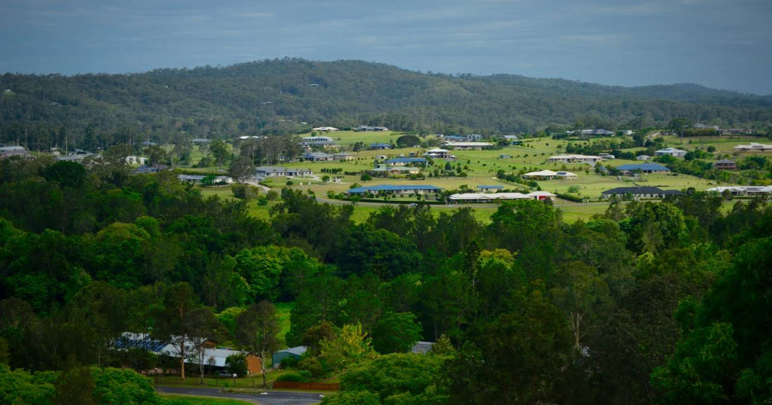

The Home Office Effect in Highvale and Samford
Highvale and the Samford district aren’t conventional work hubs. There’s no business park skyline, no commuter bottleneck at a train station, no obvious boundary where residential calm gives way to commercial activity. And yet, a substantial slice of the local economy is operating in plain sight — just not on the street frontage.
What’s happening here reflects a broader national shift. Working from home is no longer a pandemic-era workaround; it has settled into a durable pattern across Australia. The Australian Bureau of Statistics reported that around 36% of employed Australians usually worked from home as of August 2025, a figure that has stabilised well above pre-2020 norms. In other words, remote and home-based work is now part of the economic baseline, not a temporary exception.
What makes Highvale and Samford interesting is how strongly that national trend appears to concentrate at the suburb level.
What the last census captured — and what the next one may change
The clearest benchmark we have is still the 2021 Census, which captured the early stages of this shift. On Census day, 30.3% of employed people in Highvale reported working from home. Samford Valley followed at 29.2%, with Samford Village at 29.5%. Across the wider City of Moreton Bay, the figure was 14.4%.
Even then, this pocket was operating at roughly double the local government average.
What matters now is context. Those figures were recorded before hybrid work fully normalised, before many employers locked in flexible arrangements, and before a new wave of households actively selected where to live based on work-from-home viability. With another census due in August, it’s reasonable to expect that the next suburb profile will reflect a more mature, embedded version of this pattern — not a retreat from it.
That gap changes how you read the area. It’s not only a lifestyle choice; it’s a working arrangement. Many households here aren’t choosing between “country feel” and “city job” — they’re reshaping the job to fit the place.
A hidden economy, built into the housing stock
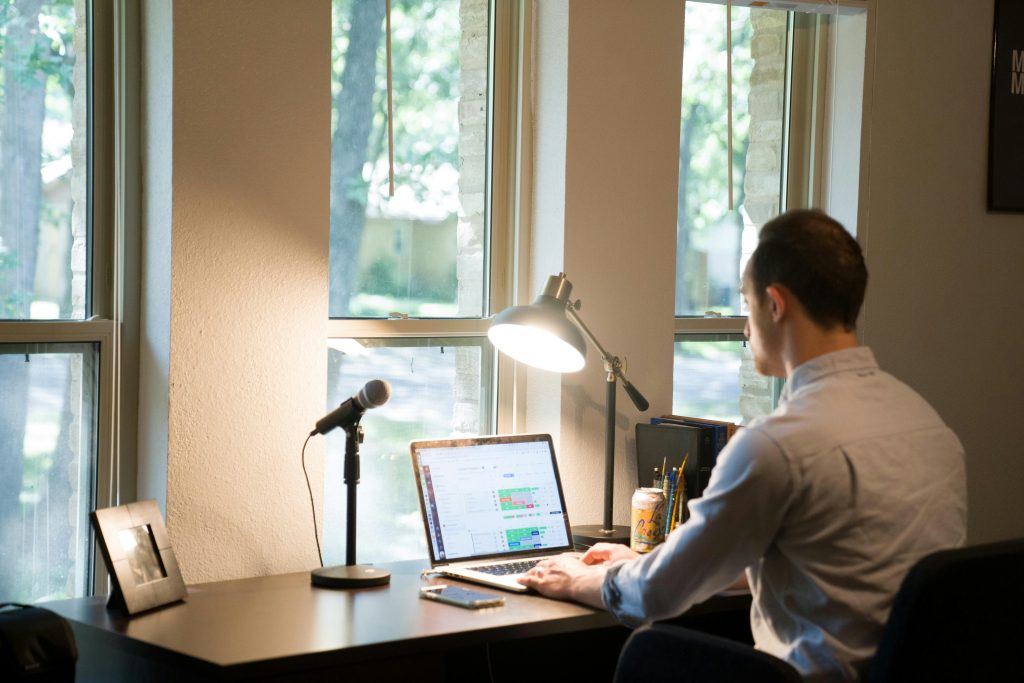
Home-based work doesn’t announce itself. It doesn’t need signage or shopfronts. It needs usable space and separation: a spare room that can hold a desk without swallowing the household, a garage that can double as a studio, a shed that stores stock, or a quiet corner where video calls don’t collide with family life.
When work shifts home, the home itself becomes infrastructure. Features that once felt optional start to read as functional requirements. Floor plans are assessed differently. So are outbuildings, acoustics, parking, storage and how close a house sits to the street.
In places like Highvale and Samford, you can see the demand logic without needing to restate that “people work from home now”. The national trend is already established. What this pocket shows is what happens when that trend clusters locally: expectations change, and the housing stock is read through a new lens.
Liveable layouts and workable spaces in demand
Home-based work may be visually discreet, but the choices it enables show up clearly in what people buy. When the daily commute stops being the organising principle, buyers often prioritise space, separation, flexibility and adaptability.
A scan of sales from November 2025 to January 2026 shows premium demand spread across family homes, lifestyle holdings and elevated addresses — rather than concentrating around any single “office-adjacent” location.
That demand is already visible in recent high-end transactions handled by local agents. Georgie Haug has been active at the top of the market across both Samford Valley and Highvale, including the sale of 15 Campbell Court, Samford Valley, a six-bedroom, three-bathroom home on 4,001 sqm, which sold for $2.9 million. In the same pocket, 143 Wights Mountain Road, a four-bedroom, three-bathroom home on 3.28 hectares, sold for $2.202 million through Leanne Sinclair.
In Highvale, Georgie Haug also handled the sale of 52 Sky Drive, a four-bedroom, two-bathroom home on 6,103 sqm, which sold for $2.4 million, as well as 50 Reiners Road, a five-bedroom, three-bathroom home on 1.24 hectares that sold for $2.075 million. 10 Muskwood Court, a four-bedroom, two-bathroom home on 5,072 sqm, sold for $1.73 million, with the sale handled by Rochelle Adgo.
Here are the highest recorded sales in that three-month window:
- 52 Sky Drive, Highvale — $2,400,000, sold 22 Dec 2025
- 50 Reiners Road, Highvale — $2,075,000, sold 30 Nov 2025
- 10 Muskwood Court, Highvale — $1,730,000, sold 11 Nov 2025
- 7 Bywood Court, Highvale — $2,350,000, sold 03 Nov 2025
- 15 Campbell Court, Samford Valley — $2,900,000, sold 30 Nov 2025
- 57 Burton Lane, Samford Valley — $1,670,000, sold 21 Nov 2025
- 143 Wights Mountain Road, Samford Valley — $2,202,000, sold 19 Nov 2025
Taken together, the list reinforces a simple point: workability and liveability are no longer separate conversations. Whether buyers are chasing outlook, land, or privacy, the ability to live well and work effectively from the same address is increasingly baked into the value equation.

Why this pocket punches above its weight
The reasons are practical, not mysterious:
1) Work that can travel
A growing share of modern work is portable: professional services, consulting, digital roles, administration, creative production, online retail, remote corporate work, and trades coordinated from a home base. In a December 2025 ABS release, flexibility was cited as a major driver of working from home, alongside operating a business from home or holding a home-based role.
2) Clearer permission to operate
Home-based business activity is more likely to thrive where the rules are legible. City of Moreton Bay’s planning information sheet notes that, in many cases, council approval is not required for a home-based business if it meets relevant benchmarks under the planning scheme — with applications required where thresholds are exceeded.
ABLiS reinforces the framework, defining a home-based business as one where business activity remains secondary to residential use, whether conducted within a dwelling or an outbuilding.

3) Digital capability, increasingly supported
In a home-based economy, digital tools are not optional extras. They function as storefront, booking system, invoicing desk and marketing channel. Programs such as Council’s Business Boost Tech Essentials initiative have aimed to support local operators with access to digital tools, training and capability-building.
Because connectivity can vary property by property, the most practical test of suitability remains the address-level checker — a quiet but critical step in assessing whether a home can genuinely support modern work.
The “third place” factor: not quite home, not quite office
Working from home can be efficient but isolating. Sustainable home-based business communities still rely on networks: referrals, collaboration, mentoring and spaces that sit somewhere between private and public life.
This is where Samford’s local ecosystem adds texture. The Samford & Districts Chamber of Commerce explicitly frames its role around building a connected business community, signalling that economic life here extends well beyond traditional shopfronts.

Samford Commons’ annual reporting has referenced running a home-based business survey and progressing a co-working space business case — the kind of local breadcrumb that suggests this isn’t a sudden fad, but a slow shift being noticed and planned for.
That matters because it shows a pathway between purely home-based work and something more resilient: shared spaces, shared learning, and local relationships that strengthen small operators.
The quiet rise is already measurable
Calling this a “quiet rise” isn’t a prediction so much as a description.
When roughly three in ten employed residents were already working from home at the last census — and national rates have since settled higher — this isn’t a fringe behaviour. It’s a defining feature. The upcoming census is likely to sharpen, rather than erase, that picture.
Highvale and Samford may present as lifestyle suburbs. But the evidence suggests they function as something else as well: work suburbs, built incrementally and quietly — one spare room, shed, studio and reliable internet connection at a time.

Published 6-Feb-2028
Featured Image Credit: Rachid Ghariss/Google Maps
