
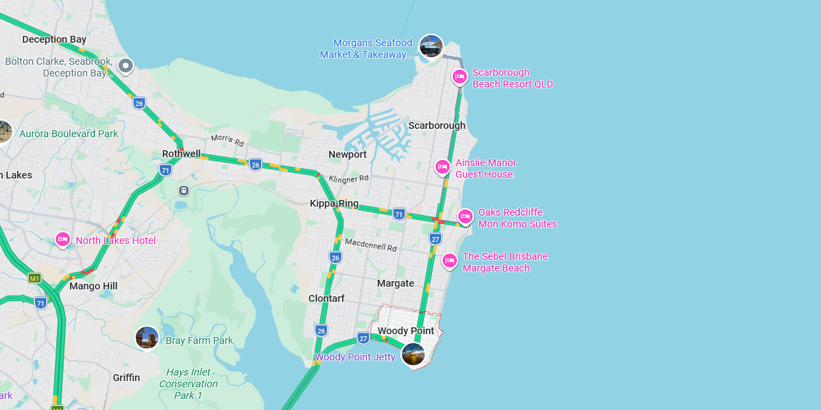

The Peninsula’s Pulse: Why the Fishing Industry Is Still Driving Property Value in Scarborough, Redcliffe, and Woody Point
At sunrise in Scarborough Harbour, the Peninsula still sounds like a working port.
Diesel engines start before dawn. Commercial boats move out toward Moreton Bay. Seafood trucks arrive while walkers and cafe customers gather along the waterfront.
That atmosphere is becoming increasingly rare in southeast Queensland — and it is quietly helping shape property value across the Peninsula.
Unlike many waterfront precincts that have shifted almost entirely toward tourism and apartment living, the Redcliffe Peninsula still operates around a genuine maritime economy and buyers are responding to it.
QUICK LINKS – CLICK TO READ
- Scarborough’s Working Harbour Advantage
- The Peninsula’s Property Market Reflects Its Waterfront Identity
- Fishing Has Shaped the Bay for Thousands of Years
- The Railway Turned the Peninsula Into Brisbane’s Seafood Pantry
- The Prawn Boom Changed Scarborough
- The Oyster Trade Came Before the Trawlers
- Investing in a Working Waterfront
Buyers Are Paying for Marine Infrastructure
Across the Peninsula, boating infrastructure is increasingly shaping buyer demand.
In Scarborough and Redcliffe, homes with wide side access, oversized sheds, and high-clearance garages attract strong interest because they accommodate large trailer boats and fishing equipment.
In Newport’s canal estates, pontoons and direct deep-water access can influence value almost as strongly as the house itself.
For many buyers, especially downsizers and lifestyle movers from Brisbane, proximity to the bay is no longer enough. They want properties that make boating practical:
- secure boat storage
- quick ramp access
- marina proximity
- canal access
- walkability to harbour precincts
That demand is helping create a distinct “marine lifestyle” premium across the northern bayside.
Scarborough’s Working Harbour Advantage
Scarborough occupies a rare position in southeast Queensland’s property market because the harbour still functions as both a marina and an active commercial fishing base. Fishing boats still operate alongside cafes, restaurants, apartment developments, and recreational berths.
That gives the suburb something many newer waterfront precincts lack: a genuine working-waterfront atmosphere.
Queensland Tourism continues to describe Scarborough Harbour as a “commercial fishing hub” and gateway to Moreton Bay Marine Park, while Moreton Bay Foundation research identifies Moreton Bay as Queensland’s most significant commercial fishing region by value and catch volume relative to area.
For buyers, that translates into a lifestyle built around a real maritime economy rather than a purely residential waterfront aesthetic.
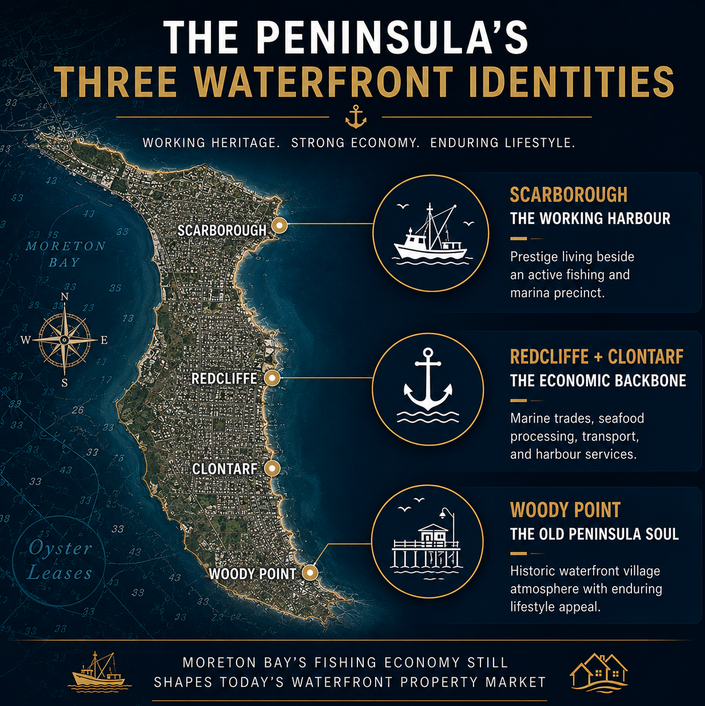
The Peninsula’s Property Market Reflects Its Waterfront Identity
Recent sales across Scarborough, Redcliffe, and Woody Point show a clear pattern: buyers are paying strongest premiums for properties closely tied to the bay lifestyle.
Waterfront positioning, marina proximity, large garages, side access, and expansive entertaining spaces continue dominating the top end of the market. Apartments overlooking the harbour are competing alongside substantial family homes designed around boating and outdoor living — reinforcing how deeply the marine economy still shapes buyer demand across the Peninsula.
Scarborough — Top 10 Sales (Last 90 Days)
Scarborough — Top 10 Sales (Last 90 Days)
| Address | Beds | Bath | Price | Agent |
|---|---|---|---|---|
| 14 Murphy Street | 4 | 3 | $1.98M | Jess Culling |
| 11 Hobbs Street | 5 | 2 | $1.865M | Stephanie Williams |
| 165A Turner Street | 3 | 2 | $1.65M | Mat Davey |
| 27 Osbourne Street | 4 | 2 | $1.596M | Danny Mailer |
| 159 Prince Edward Parade | 3 | 1 | $1.585M | Cameron Reid |
| 90 Seaville Avenue | 4 | 2 | $1.55M | Clinton Viertel |
| 801/4 Anderson Street | 3 | 2 | $1.44M | Glen Wilson |
| 17/146 Prince Edward Parade | 3 | 2 | $1.41M | Glen Wilson |
| 122/113 Landsborough Avenue | 3 | 2 | $1.4M | Anne Windsor |
| 14 Lucas Street | 4 | 2 | $1.4M | Clinton Viertel |
Scarborough’s highest recorded sale for the last 90 days was 14 Murphy Street at $1.98 million, handled by Jess Culling of Place Redcliffe Peninsula. The result reflects continued demand for large modern homes close to Scarborough Marina and the harbour precinct. Properties offering space, lifestyle, and proximity to boating infrastructure continue commanding strong premiums in the suburb.
Redcliffe — Top 10 Sales (Last 90 Days)
Redcliffe — Top 10 Sales (Last 90 Days)
| Address | Beds | Bath | Price | Agent |
|---|---|---|---|---|
| 3/30 Prince Edward Parade | 3 | 2 | $2.7M | Clinton Viertel |
| 71 Prince Edward Parade | 4 | 3 | $1.815M | Belle Property |
| 163/59 Marine Parade | 3 | 2 | $1.78M | Stacey Obst |
| 3 Shields Street | 4 | 3 | $1.75M | Ben Campbell |
| 25/94-98 Prince Edward Parade | 3 | 2 | $1.629M | Roxanne Paterson |
| 5 Walter Street | 4 | 2 | $1.6M | Belle Property |
| 37 Humpybong Esplanade | 3 | 1 | $1.435M | Ben Campbell |
| 709/99 Marine Parade | 3 | 2 | $1.4M | Danny Mailer |
| 405/185 Redcliffe Parade | 3 | 2 | $1.335M | Dianne Clarke |
| 18/77-79 Marine Parade | 3 | 2 | $1.302M | Clinton Viertel |
Redcliffe’s highest recorded sale for the last 90 days was the $2.7 million transaction at 3/30 Prince Edward Parade, sold by Clinton Viertel of Belle Property Redcliffe. Waterfront apartments featured prominently throughout Redcliffe’s top sales, reinforcing the strength of buyer demand for bay views, walkability, and access to the Peninsula’s coastal lifestyle. Marine Parade and Prince Edward Parade continue to anchor the suburb’s prestige market.
Woody Point — Top 10 Sales (Last 90 Days)
Woody Point — Top 10 Sales (Last 90 Days)
| Address | Beds | Bath | Price | Agent |
|---|---|---|---|---|
| 702/16 Woodcliffe Crescent | 4 | 2 | $2.3M | Drew Crump |
| 48A Arthur Street | 4 | 2 | $1.67M | Dianne Clarke |
| 6/38 Gayundah Esplanade | 3 | 2 | $1.5M | Steve Isakka |
| 32 Blakeney Street | 3 | 1 | $1.41M | Clinton Viertel |
| 13b Short Street | 3 | 1 | $1.205M | Ben Smith |
| 59 King Street | 3 | 1 | $1.2M | Steve Isakka |
| 22 Hardiman Street | 6 | 3 | $1.17M | Damien Misso |
| 81 Victoria Avenue | 4 | 1 | $1.155M | Ben Smith |
| 139 Oxley Avenue | 3 | 2 | $1.123M | Damien Misso |
| 10/56 Oxley Avenue | 3 | 2 | $1.107M | Mary Di Marco |
Woody Point’s highest recorded sale for the last 90 days was the $2.3 million sale of 702/16 Woodcliffe Crescent, sold by Drew Crump of Harcourts Solutions. The result highlights the scarcity of premium waterfront apartments in the suburb and the ongoing appeal of Woody Point’s quieter village-style atmosphere. Buyers continue paying premiums for tightly held bayfront positions with strong lifestyle appeal.
Fishing Has Shaped the Bay for Thousands of Years
Long before the Peninsula became a residential market, Moreton Bay was a highly productive fishing region.
The Quandamooka people developed a sophisticated marine culture built around seasonal fish movement, oyster beds, dugong hunting, and tidal ecosystems.
Among the best-known accounts are stories of cooperative fishing with wild dolphins. Historical records describe dolphins herding schools of mullet toward waiting nets while fishers coordinated catches from shore.
The relationship reflected a deep understanding of the bay’s ecology and reinforced how central fishing has always been to life around Moreton Bay.
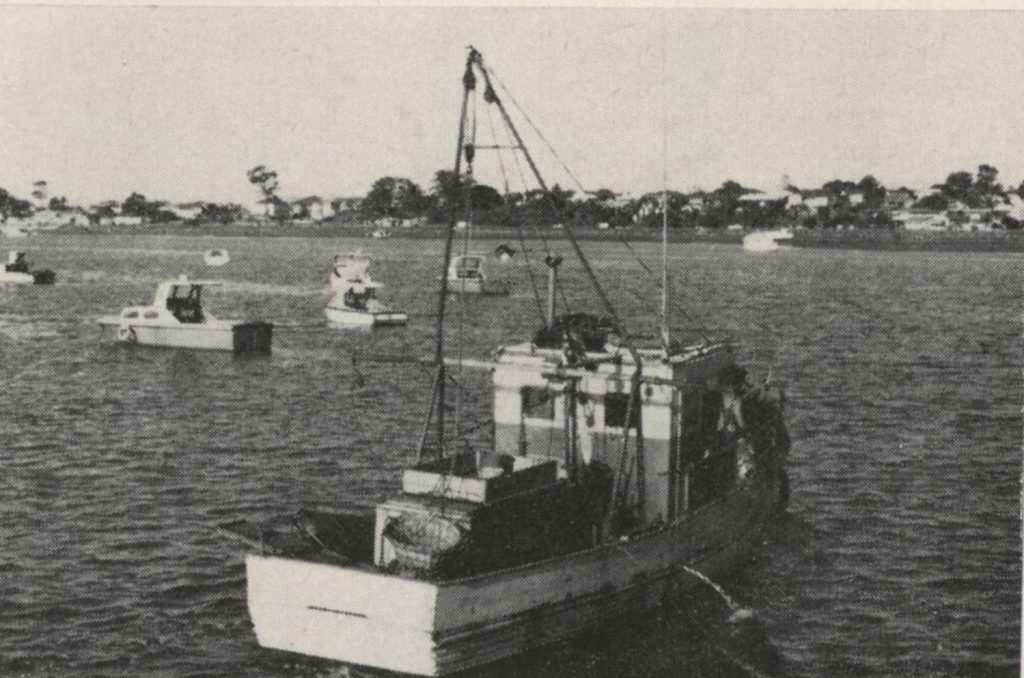
Photo Credit: Australian Fisheries Magazine/Catherine Mahoney/Facebook
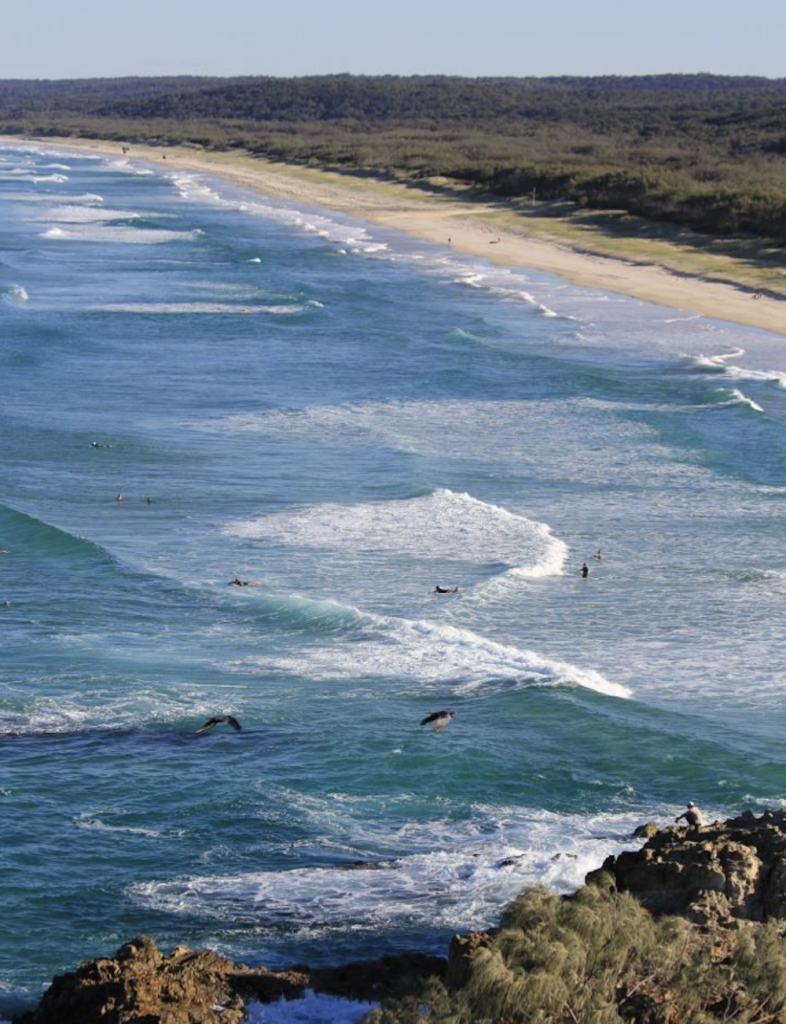
The Railway Turned the Peninsula Into Brisbane’s Seafood Pantry
Commercial fishing expanded rapidly during the late 1800s after rail links connected Sandgate and Shorncliffe to Brisbane.
Fresh seafood from Moreton Bay could suddenly reach city markets much faster than before, helping establish the Peninsula as a major seafood supplier for Brisbane hotels, fishmongers, and produce markets.
Queensland’s formal commercial fishing framework dates back to the Fisheries Act of 1877, highlighting how deeply embedded the industry became in the colony’s economy.
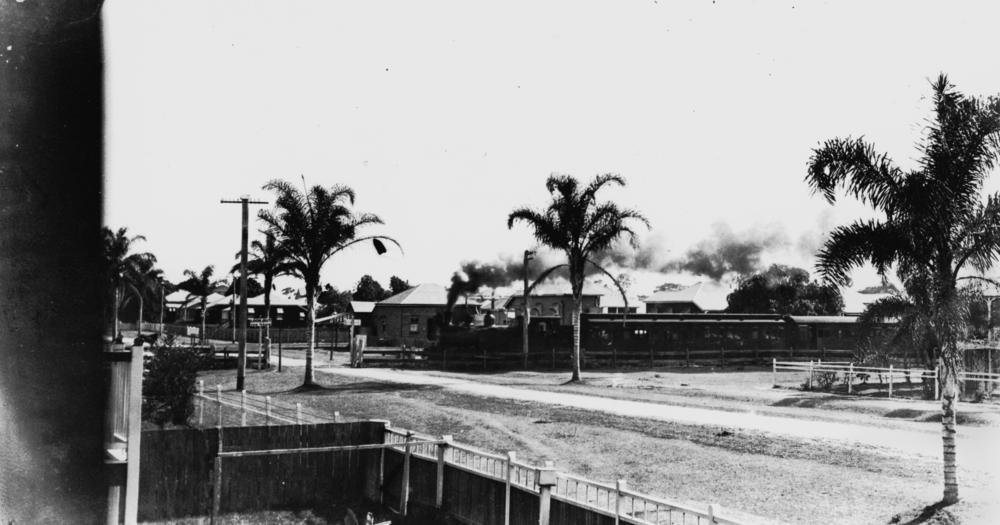
Photo Credit: Wikipedia/Public Domain


The Prawn Boom Changed Scarborough
Scarborough Harbour’s modern identity was shaped largely by the post-war prawn industry.
Historical records show there were around 20 prawn trawlers operating from the Peninsula by the late 1950s. By 1963, more than 120 trawlers and fishing boats were operating from Thurecht’s Jetty.
That growth transformed the waterfront.
Boat sheds, fuel depots, seafood facilities, marine workshops, and harbour infrastructure expanded rapidly as the fishing fleet grew.
Planning for Scarborough Boat Harbour began in 1965, helping establish the harbour precinct that still anchors the suburb today.
Much of Scarborough’s character — the mix of marina life, seafood culture, industrial sheds, and hospitality venues — traces directly back to that era.
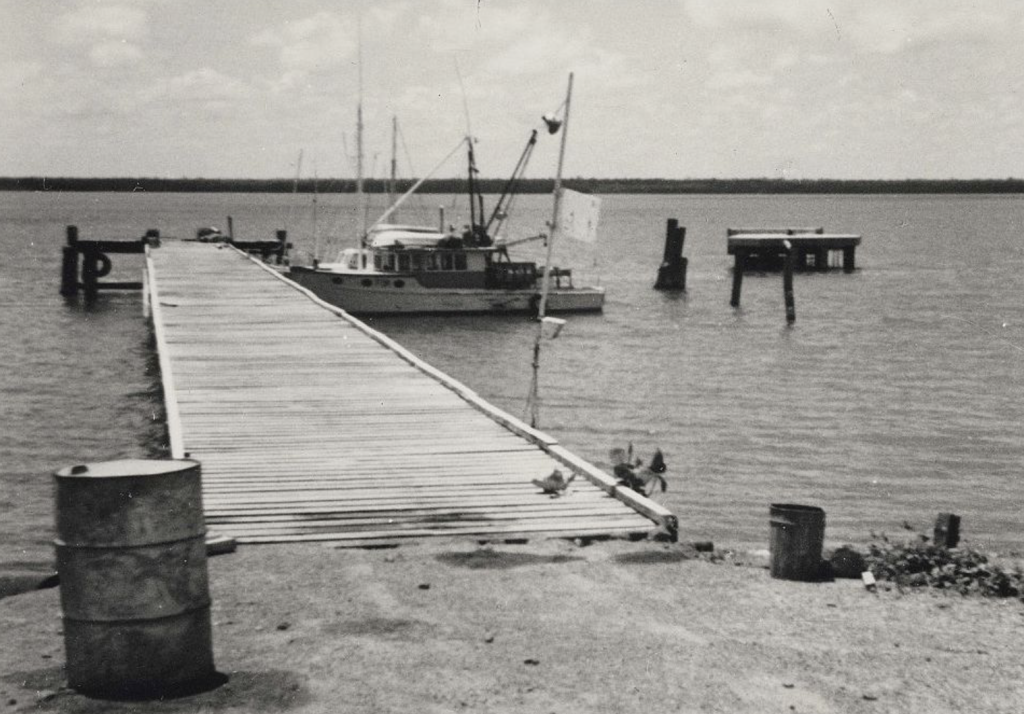
Photo Credit: Moreton Bay Libraries
The Oyster Trade Came Before the Trawlers
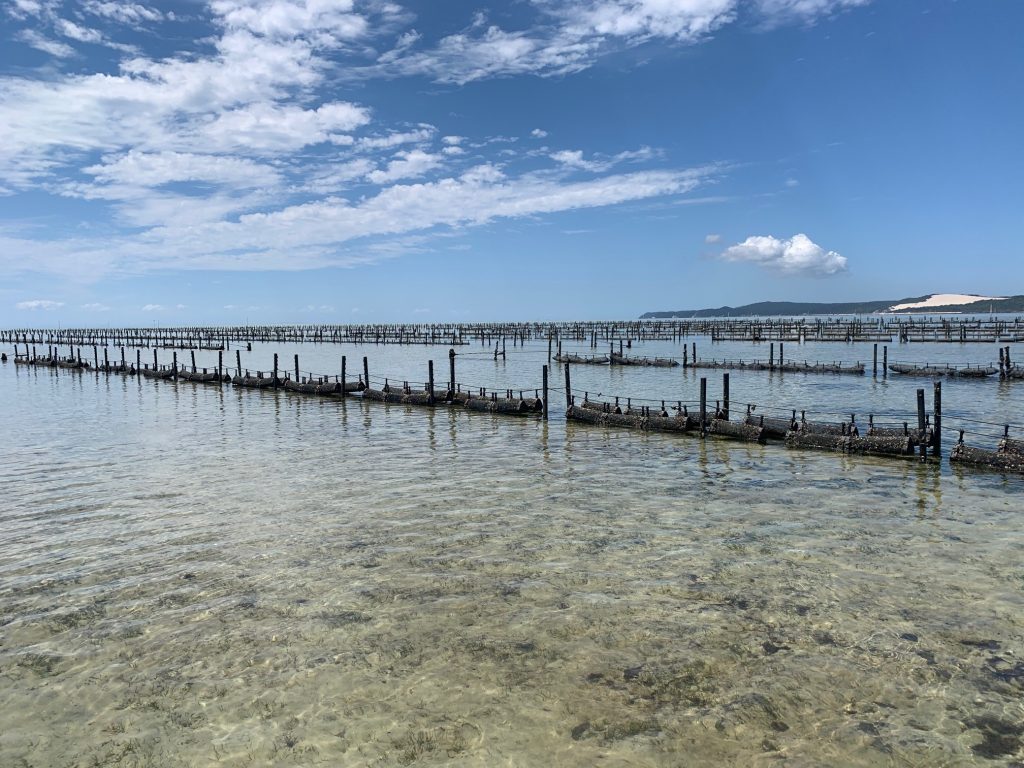
Before prawns dominated Moreton Bay, oysters were one of the Peninsula’s most valuable marine commodities.
Large sections of the foreshore were once covered by oyster leases, with stone retaining walls built across tidal flats to support cultivation.
Some remnants of those oyster walls can still occasionally be spotted at very low tide.
Historical accounts also show oyster suppers became a major attraction around Woody Point during the early 1900s.
The famous Cooee Oyster Café near Woody Point jetty became one of the district’s best-known waterfront venues long before “dining precincts” became a property marketing term.
Investing in a Working Waterfront
The fishing industry is not simply part of the Peninsula’s history.
It still shapes how buyers assess property value today.
Marine access matters. Harbour proximity matters. Side access, pontoons, sheds, and marina infrastructure continue influencing demand across the bayside market.
And unlike many coastal precincts, the Peninsula’s waterfront identity was not artificially created through redevelopment.
It grew from more than a century of working life around Moreton Bay.
That history still sits in the streetscape — and increasingly, in the property values attached to it.
Published 7-May-2026
