

Nature’s New Neighbours: Oyster Reefs Reviving the Pine River
Along the Pine River near Murrumba Downs and Griffin, an important environmental restoration project is underway beneath the waterline. What began as a small trial almost two years ago has shown promising early results in supporting waterway health through nature-based solutions.
The initiative, led by Unitywater in partnership with the University of the Sunshine Coast (UniSC), OzFish and Healthy Land and Water, uses baskets of recycled oyster shells to help rebuild shellfish reefs—ecosystems that were once common across Australia’s coastline but are now more than 95 per cent lost.
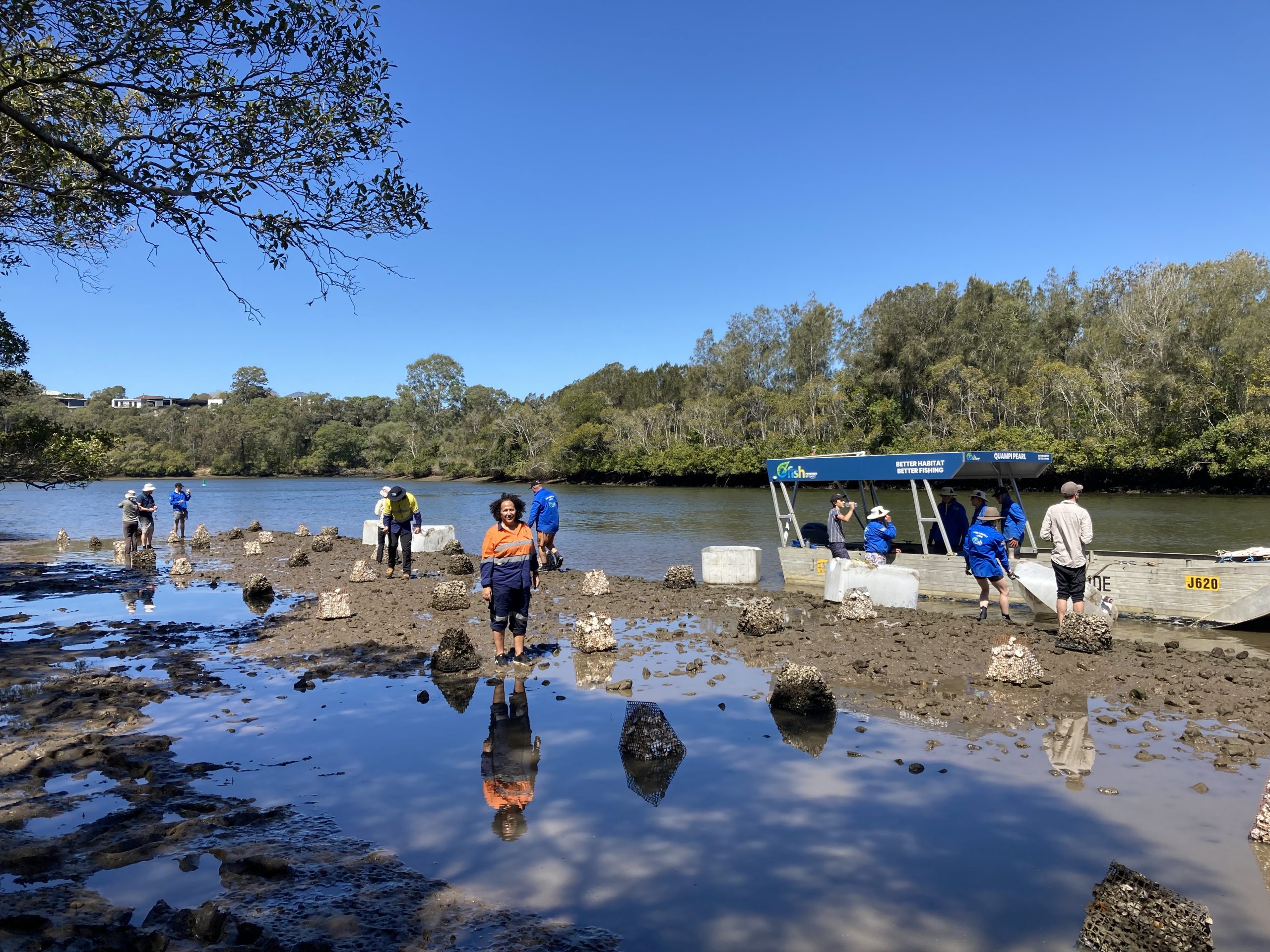
Baskets filled by OzFish volunteers are placed on the riverbed, where young oysters can settle and begin filtering the water around them. Over time, these reefs help improve water quality and can contribute to healthier aquatic environments.
A Community Effort Backed by Science
The recycled shells used in the reefs are sourced from restaurants and commercial shucking operations. After collection, they are cured in the sun for twelve months—a natural cleaning process that removes sand, grit and impurities. Once ready, the shells are packed into purpose-built baskets and deployed at the trial site.
Unitywater says the project was designed to test the value of shellfish reefs in reducing nutrient loads downstream of the Murrumba Downs Wastewater Treatment Plant and to understand their potential for broader nutrient management.
Unitywater Executive Manager Sustainable Infrastructure Solutions, Mike Basterfield, explains:
“This trial helps us understand the true value of shellfish reefs in reducing nutrients downstream from our Murrumba Downs Wastewater Treatment Plant. If the early results continue, reefs could become a meaningful part of our long-term strategy.”
Researchers from UniSC have been analysing the nitrogen content of both oyster tissue and surrounding sediment, using established scientific techniques to assess the reefs’ performance.
How Oyster Reefs Improve Water Quality
Oysters are well known for their natural filtering abilities. As they feed, they draw water through their gills, capturing organic matter and absorbing nutrients such as nitrogen. Much of this nitrogen is locked into their shells and tissues as they grow.
In the Pine River trial, the reefs removed more than 7 kilograms of nitrogen (7.24 kg) in the first six months of monitoring.
Unitywater’s analysis suggests that a larger network of about 154 reefs—containing roughly 6,500 baskets and covering an area similar to two rugby league fields—could potentially offset the nitrogen discharged from a wastewater treatment plant servicing around 10,000 people.
According to Mr Basterfield:
“These oysters act as natural filters. They store nutrients in their body tissue and shells, ensuring those nutrients don’t re-enter the waterway. The early results are promising and show just how effective these reefs could be at scale.”
Supporting a Healthy Moreton Bay
The Pine River is used recreationally by locals, and its overall health plays an important role in the broader Moreton Bay marine environment. Clean, well-functioning waterways support stronger ecosystems and create flow-on benefits for fish, birds and aquatic vegetation.
Restoring shellfish reefs is known to improve water clarity and stabilise surrounding sediments—typical benefits observed in shellfish reef systems globally. While these specific outcomes have not yet been measured in the Pine River trial, they are anticipated ecological advantages.
For local communities, the trial represents a practical example of how scientific research and environmental stewardship can work together to enhance the region’s natural assets.
Expanding the Reef Network
Following the success of early results, Unitywater has received approval from the State Assessment Referral Agency (SARA) to install two additional reef sites in the North Pine River, between Lawnton and Murrumba Downs. These sites will help researchers understand how the reefs perform under different conditions such as depth and salinity.
Mr Basterfield says these new locations will be crucial as Unitywater explores the potential to scale the approach:
“Every river system is different, so these additional sites will help us build a clearer picture of how reefs perform under varying conditions. It’s an important step as we look for practical, nature-based solutions to support our 2040 goal of diverting or offsetting all nutrients from wastewater.”
Volunteers have played a key role in preparing the shells to date, and similar opportunities may arise as the project expands.
A River With Renewed Potential
As the Pine River evolves alongside the suburbs that surround it, projects like this demonstrate new possibilities for long-term waterway health. The reefs may be small in size now, but they represent a promising approach, based on early findings, to restoring the natural filtering functions that once supported Australia’s coastal waterways.
With continued research, careful monitoring and community participation, these restored shellfish reefs may become an important part of the Pine River’s next chapter.

Featured Image Credit: Supplied
