
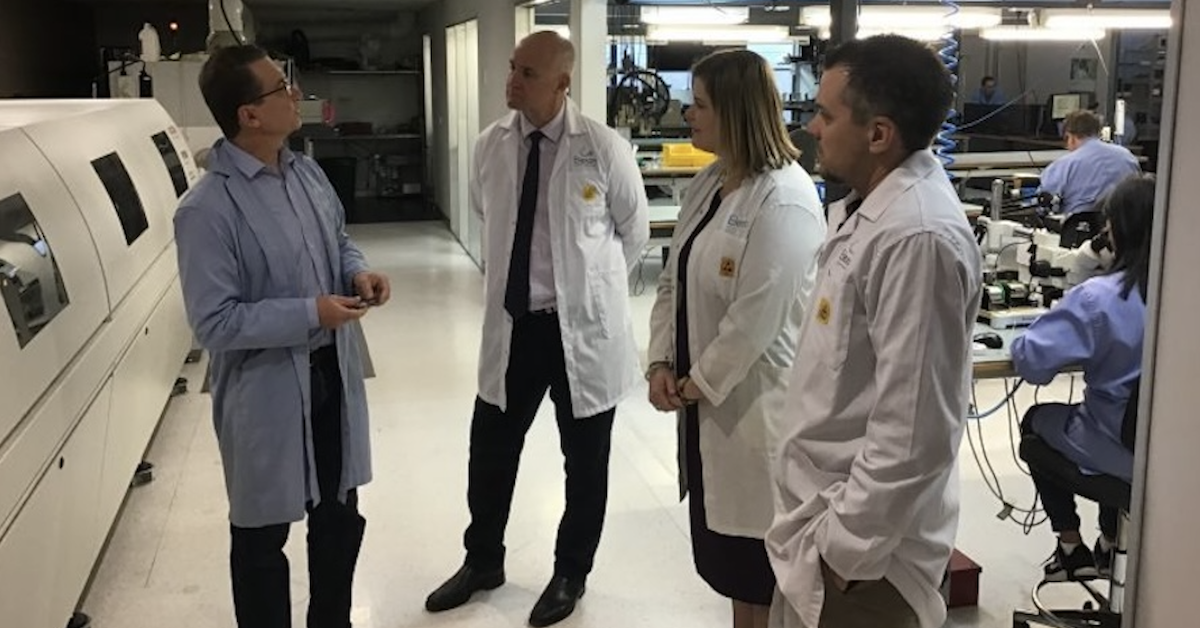

Why Brendale’s Established Factories Are Turning to Automation
Brendale’s factories are not getting bigger. They are getting smarter.
Behind the roller doors of long-established workshops, a quiet shift is underway. Sensors are being installed on machinery. Production schedules are being digitised. Maintenance is becoming predictive rather than reactive. In one of the largest industrial precincts within the City of Moreton Bay, automation is no longer theoretical — it is becoming operational.
From Trade Sheds to Smart Systems
Brendale’s rise began with land and logistics. Positioned along South Pine Road with access to the Bruce Highway and Gateway Motorway corridors, the suburb evolved from semi-rural fringe land into one of North Brisbane’s primary manufacturing and distribution nodes. Functional tilt-slab sheds, hardstand yards and trade facilities filled the precinct as Brisbane’s northern corridor expanded.
For decades, that meant forklifts, fabrication bays and practical workshop layouts. But the physical form of those buildings — wide spans, truck access and adaptable interiors — is now proving ideal for automation upgrades.
Today, the change is visible in what sits inside those walls.
AMICIS Manufacturing: “Lights-Out” Machining in Brendale
In parts of Brendale, machines now continue working after staff have gone home. Operators queue components, pallets shuttle parts between machining stations, and completed batches are ready by morning. Companies such as AMICIS Manufacturing have publicly described their ability to run “lights-out” production using robotics and palletised systems such as Mazak PALLETECH automation setups.
This is not conceptual automation. It is installed equipment allowing extended production cycles without continuous human handling, increasing throughput while reducing bottlenecks.
Electro Systems: The PLC Brains Behind the Machines
Not all automation looks like a robot arm. Much of it sits inside control cabinets. Brendale-based Electro Systems specialises in PLC programming and servo control — the industrial logic that governs how production lines move, sequence and respond.
If a conveyor runs smoothly without collision, if packaging equipment times movements precisely, if motors operate with controlled accuracy, that is PLC code and servo discipline at work. These systems are the hidden intelligence inside modern factories, and they are being built locally.
Impact CNC: Software-Driven Cutting and Nested Manufacturing
Automation is also visible in fabrication and joinery. Impact CNC, based in Brendale, supplies CNC routers, lasers, and flatbed cutters used in nested-based manufacturing.
Nested manufacturing software optimises how parts are cut from sheets to reduce waste and maximise yield. The impact is measurable — faster throughput, cleaner cuts and improved material efficiency. In sectors such as signage, cabinetry and cladding, that software layer is transforming how production happens.
ALDI and the Cold-Chain Signal
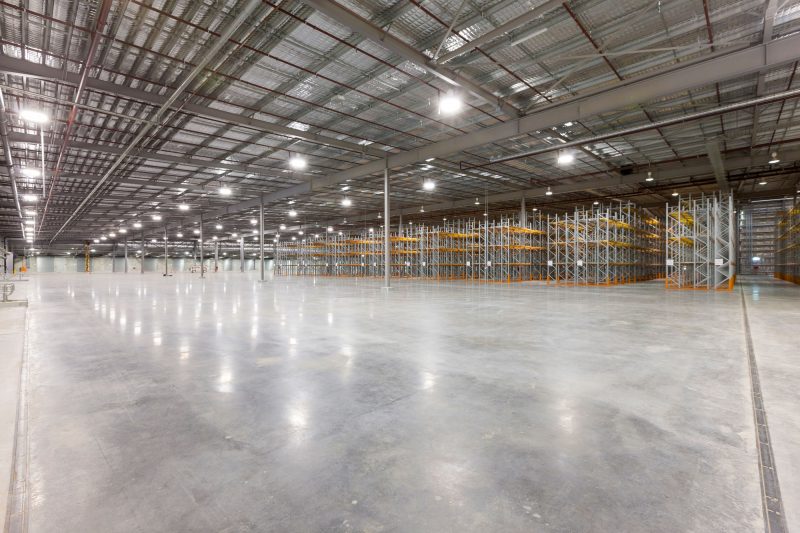
Warehouse automation often reveals itself first in cold-chain environments. Freezer zones limit how long people can work comfortably, making repetitive goods handling a strong candidate for systemisation. Reporting indicates that ALDI’s Brendale distribution facility is expanding its footprint with additional ambient warehouse and freezer capacity.
Larger distribution footprints, particularly those incorporating freezer components, frequently correlate with increased use of scanning systems, warehouse management software and automated handling processes. Even without full robotics, these are system-driven environments.
The 27,000 sqm Warehouse: Buildings Shaped for Automation
Automation also shows up in the buildings themselves. Modern logistics facilities in Brendale — including a reported 27,000-square-metre warehouse project leasing ahead of completion — are designed around high-throughput movement. Wide hardstands, streamlined truck access, tall internal clearances and racking-friendly layouts all support digital warehouse systems and scalable automation.
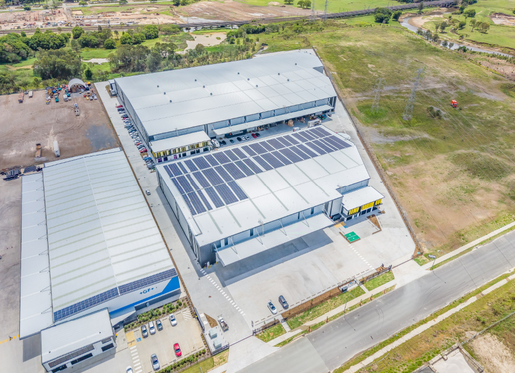


These are not sheds built for yesterday’s workflows. They are infrastructure shaped around systemised operations.
In Brendale, automation is not replacing the industrial backbone. It is upgrading it.
A Mature Industrial Base Under Pressure to Evolve
Brendale’s industrial mix spans engineering, fabrication, joinery, electrical components, machinery servicing and logistics. Many operate from decades-old facilities that remain structurally sound but were never designed for digital integration.
Meanwhile, structural pressures are intensifying. Skilled labour shortages persist across engineering trades. Energy and compliance costs are rising. Customers expect faster turnaround and real-time supply visibility.
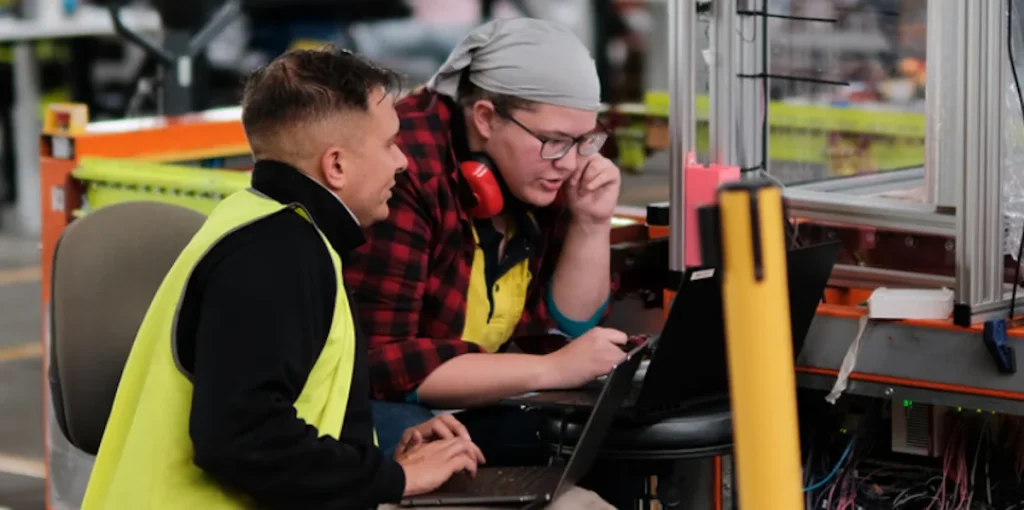
In this context, automation is less about experimentation and more about survival.
On the ground, that means CNC machinery integrated with scheduling software, sensor-driven predictive maintenance, AI-assisted inventory forecasting, data-driven production sequencing and energy monitoring systems. These incremental upgrades — not full rebuilds — allow Brendale operators to remain competitive without relocating.
Where Brendale’s Workforce Lives
Residential sales reinforce Brendale’s role as an employment-driven suburb — and the data shows strength at both ends of the market.
At the top of the range, two seven-figure transactions over the past six months signal confidence in the suburb’s long-term fundamentals. In August, 14 Davis Lane sold for $1.3 million through the Scott Bertie team — a four-bedroom, two-bathroom home on 1.18 hectares. In November, 27 Heatherlea Street achieved $1 million, sold by Scott Deaves. These are not entry-level transactions; they represent buyers committing significant capital within a suburb defined primarily by industry. That willingness to pay at the upper end suggests confidence in employment stability and the precinct’s future trajectory.
Below that tier, the townhouse segment provides market depth. Prices between $685,000 and $840,000 along Stanley Street, Nicol Way and Leitchs Road reflect steady absorption rather than speculative spikes.
Other recent sales include:
75/325 Stanley Street — $825,000
119/325 Stanley Street — $839,000
114/325 Stanley Street — $840,000
150/350 Leitchs Road — $760,000
10/350 Leitchs Road — $760,000
160/71 Stanley Street — $761,000
407/2 Nicol Way — $746,000
510/2 Nicol Way — $745,000
908/2 Nicol Way — $725,000
8 Perry Court — $685,000
The pattern is clear: Brendale’s residential market is being underwritten by its industrial base. As factories upgrade rather than relocate — investing in automation, warehouse expansion and higher-skilled operations — housing demand across both acreage holdings and strata townhouses appears anchored to employment resilience rather than short-term lifestyle appeal. The proximity of UniSC Moreton Bay further strengthens that outlook by reinforcing the local skills pipeline aligned with advanced manufacturing capability.
Events Driving AI and Automation Adoption
Automation in Brendale is being reinforced by both local and national industry activity.
On 5 February, Manufacturing Queensland hosted its first networking event of the year in Brendale at Hip Hops Brewers. The session brought together manufacturers from Moreton Bay and the Sunshine Coast to share updates on workforce programs, the Transforming Queensland Manufacturing Grant and opportunities linked to Australian Manufacturing Week 2026. Representatives from the City of Moreton Bay introduced the Manufacturers of Excellence program and outlined pathways for businesses to join the Queensland Manufacturing Hubs delegation to AMW.
Looking ahead, the Integrated Manufacturing Systems Masterclass scheduled for 10 March 2026 at UniSC Moreton Bay will focus on integrating automated equipment, digital scheduling and production analytics — practical tools for staged factory upgrades.
Australian Manufacturing Week (AMW) 2026, taking place in Brisbane from 12–14 May 2026, will showcase robotics, machine tools, Industry 4.0 integration platforms and AI-enabled production systems. For Brendale operators, access to a major national trade exhibition within South East Queensland lowers the barrier to exploring new technology suppliers.
The broader regional ecosystem is also strengthening. The ARM Hub in Northgate — Australia’s leading robotics and AI innovation hub — continues to demonstrate advanced manufacturing technologies, including AI-driven robotics and generative AI tools for industry. Its open days and industry programs provide practical demonstrations of how AI can move from concept to production floor, reinforcing a wider North Brisbane automation corridor that Brendale sits within.
Workforce and Skills: The Shift in Capability
Manufacturing represents approximately 7–9% of employment within the City of Moreton Bay according to ABS Census data, making it a significant regional employer.
Globally, however, the sector faces skilled labour shortages. Tim Long, global head of manufacturing at Snowflake, has forecast that by 2026 manufacturers will increasingly deploy AI to augment skilled workers while automating routine processes. As labour costs rise and technical roles become harder to fill, companies that achieve AI-driven productivity gains will separate themselves from competitors relying on labour-intensive models.
Manufacturing’s controlled production environments also make it uniquely suited to validating AI return on investment. Unlike many sectors, factories can run controlled trials to measure output improvements, defect reduction and efficiency gains before scaling deployment. Long also predicts the rise of agentic AI — autonomous systems capable of optimising inventory routing, production sequencing and quality inspection decisions.
For Brendale, these global trends are not abstract. Local operators facing trade shortages and cost pressures sit squarely within this transformation window.
Nearby campuses of TAFE Queensland North Metropolitan and UniSC Moreton Bay support the shift through engineering, electrotechnology and automation-aligned programs. Rather than eliminating jobs, automation is increasing the technical capability required within existing roles.
Brendale is not expanding outward. It is upgrading inward — strengthening skills, integrating technology and reinforcing its position as one of Moreton Bay’s most important industrial precincts in a data-driven manufacturing era.
Published 18-February-2026
Featured Image Credit: Elexon
