

Small Supports, Real Steps: How Moreton Bay Helps People Move Back Into Housing
By the time most commuters are queuing for their first coffee, a different kind of morning routine is already underway across parts of the Peninsula. Bags are rolled tight. Bedding is folded fast. A temporary night space is turned back into a public space. The goal is simple but exhausting: stay mobile, stay unnoticed, stay safe.
For people experiencing homelessness across the Moreton Bay region, the path back indoors is rarely a single step. Homelessness services and program guidelines emphasise that progress is often built through a chain of practical supports. These are the basics that keep someone connected to help and ready for the next step toward stable housing.
While public debate can focus on where people can or cannot sleep, much of the day-to-day work happens quietly through local services, volunteers, and community networks that address one barrier at a time.
This is the long way back indoors, and it’s incremental by nature.
The unseen middle: not street to house, but step to step
Homelessness is often imagined as a binary: either someone is housed or they are sleeping rough. Specialist homelessness services, however, work with people across a wide “in-between” — couch surfing, short motel stays, overcrowded living situations, cars used as bedrooms, and temporary crisis accommodation.
On the Peninsula, local services describe people who are not disconnected from the community so much as squeezed out of it. A mix of pressures can stack up — rental stress, relationship breakdown, health challenges, and disrupted work — and when informal arrangements fall apart, housing instability can become visible.
The journey back indoors often involves stages such as:
- crisis contact
- short-term accommodation
- documentation and ID recovery for some clients
- income and support stabilisation
- tenancy support and rental-readiness assistance
- support with applications and liaison with property managers where possible
- longer-term housing placement
Any of these steps can stall. Many require coordination. And each is shaped by local capacity and housing availability.
Peninsula sales highlight the affordability gap behind housing instability
Sold results across Peninsula suburbs from October 2025 through January 2026 underline just how much housing on the bayside now trades at the premium end. While these top-tier transactions reflect the area’s appeal, such as water access, amenity, and lifestyle, they also sit in the background of a harder reality raised by homelessness services: the wider the gap between what homes cost and what many households can pay, the easier it is for one setback to become a housing crisis.
In a tight market, the challenge isn’t only “finding a home.” It’s about finding one that aligns with real wages, support payments, and the practical barriers people face after a period of instability. For people trying to move from crisis accommodation back into a lease, the Peninsula’s high sale prices are one more indicator of why the pathway back indoors can be long.
Notable recorded sales in the Oct 2025–Jan 2026 window include:
- 2B Osbourne Street, Scarborough — $3,525,000 — Sold 14 Nov 2025
- 109 Aqua Street, Newport — $2,730,000 — Sold 11 Dec 2025
- 10 Palmer Court, Newport — $2,710,000 — Sold 18 Nov 2025
- 37 Aqua Street, Newport — $2,680,000 — Sold 01 Dec 2025
- 213 Coolum Parade, Newport — $2,350,000 — Sold 13 Nov 2025
- 5/28 Woodcliffe Crescent, Woody Point — $2,325,000 — Sold 13 Oct 2025
- 4 Clifford Street, Woody Point — $1,800,000 — Sold 08 Oct 2025
- 24A Clifford Street, Woody Point — $1,515,000 — Sold 21 Oct 2025
- 15 Wendy Crescent, Clontarf — $1,450,000 — Sold 08 Oct 2025
- 7 Shea Street, Scarborough — $1,400,000 — Sold 20 Nov 2025
Why small supports change big outcomes
Some of the most immediately helpful supports are practical. A secure place to store documents can help reduce repeated loss of identification, which is a common problem that can complicate payments, appointments and rental applications. Access to showers and laundry can help people feel prepared for work and interviews. A phone charging point can help someone stay reachable for services and follow-ups. Transport assistance can help clients attend inspections and appointments. These are not dramatic interventions, but they reduce barriers that can derail progress.

In homelessness practice and research, sustained relationships and consistent access points are often cited as factors that help people stay engaged and progress. That can look like:
- consistent contact with one caseworker
- predictable access points and hours
- flexible appointment models
- partnerships with health providers
- engagement with local property managers when possible
When those pieces align, exits from homelessness can be more durable.
The Peninsula’s service web
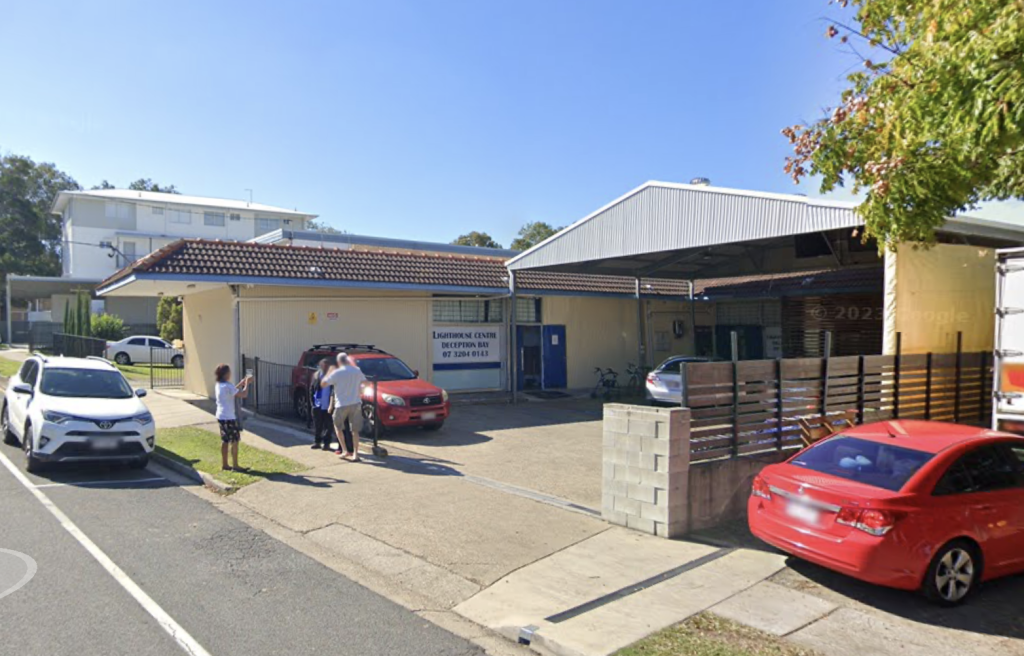
Moreton Bay’s homelessness support network includes council-linked information and coordination, state-funded specialist homelessness services, charities, and community groups. Some services focus on crisis support. Others focus on prevention and tenancy sustainment—helping people stay housed before eviction or a breakdown in living arrangements.
Depending on the provider, support may include referrals, emergency relief, practical assistance, and tenancy help. Council information also points residents toward local housing and homelessness services and guides that map available supports.
The strongest results tend to come from clear pathways: fewer dead ends, fewer repeated handoffs, and fewer times a person has to restart from scratch. Many services aim to streamline referrals and reduce retelling, helping people stay engaged long enough for housing options to open.
Coordinated care, rather than siloed assistance, is widely seen as important, particularly when people’s needs cut across housing, health and income support.
Community responses that build belonging
Not all intervention comes from formal programs. On the Peninsula, community networks can act as the connective tissue: a local organisation hosting a regular outreach visit, a neighbourhood group donating essentials, a sporting club providing a safe venue for a community day, or a business contributing to an emergency relief appeal.

Sometimes, property professionals play a small but meaningful role too. For example, explaining what documentation is needed, being clear about processes, or considering non-standard applications where appropriate and lawful. These gestures do not replace housing supply, but they can help reduce friction for people re-entering the rental market.
Belonging matters because isolation makes everything harder: following through on appointments, keeping contact details current, and persisting through repeated setbacks.
Policy, public space, and practical pathways
Council rules around camping and the use of public land have drawn attention across the region. At the same time, service systems consistently note that enforcement alone does not resolve homelessness.
More constructive outcomes can occur when public-space management is paired with active referral pathways that connect people directly to services rather than simply moving them along. That approach requires resourcing, coordination and time, and it also depends on housing options existing at the end of the pathway.
Exits from homelessness are rarely instant. Stability is built, not declared.

Featured Image Credit: City of Moreton Bay