


A Decade After the Train Arrived, Mango Hill’s Station Precinct Is Finally Set for Housing
Ten years after Mango Hill train station opened, the empty land across the road is finally set to change — with a housing project that could deliver up to 250 new homes.
For nearly a decade, commuters arriving at Mango Hill train station have looked across the road at the same sight: a fenced-off, empty block of land.
The 1.5-hectare parcel at 2 Meyers Circuit, once used as a construction set-down area during the building of the Redcliffe Peninsula rail line, has sat vacant since the station opened in 2016.
That long-idle site is now moving toward a new chapter. Under the Queensland’s Land Activation Program, the block has been released to the market with the potential to deliver up to 250 new homes directly beside the station, subject to planning approvals.
For Mango Hill residents, the project raises a larger question: what could the future of the station precinct look like?
QUICK LINKS TO SECTIONS BELOW
- Property Activity Around Mango Hill Station
- A Push for More Housing Choice
- Living Beside the Train Station
- Local Questions About Parking and Traffic
- What Happens Next
- A New Phase for Mango Hill
From Construction Yard to Development Opportunity
When the Redcliffe Peninsula rail line opened in October 2016, the land opposite Mango Hill station had already fulfilled its role as a construction staging area.
During construction it operated as a staging and storage area for materials. Once the rail line was completed, however, the site was no longer required and remained vacant.
Despite its location directly beside public transport and established neighbourhoods, the land remained unused for years.

Now planners are seeking to unlock the site as housing, transforming what has effectively been an empty construction relic into a residential precinct.
The site spans approximately 1.5 hectares and has been divided into two development-ready lots, allowing for a potential residential project of up to 250 dwellings.
Property Activity Around Mango Hill Station
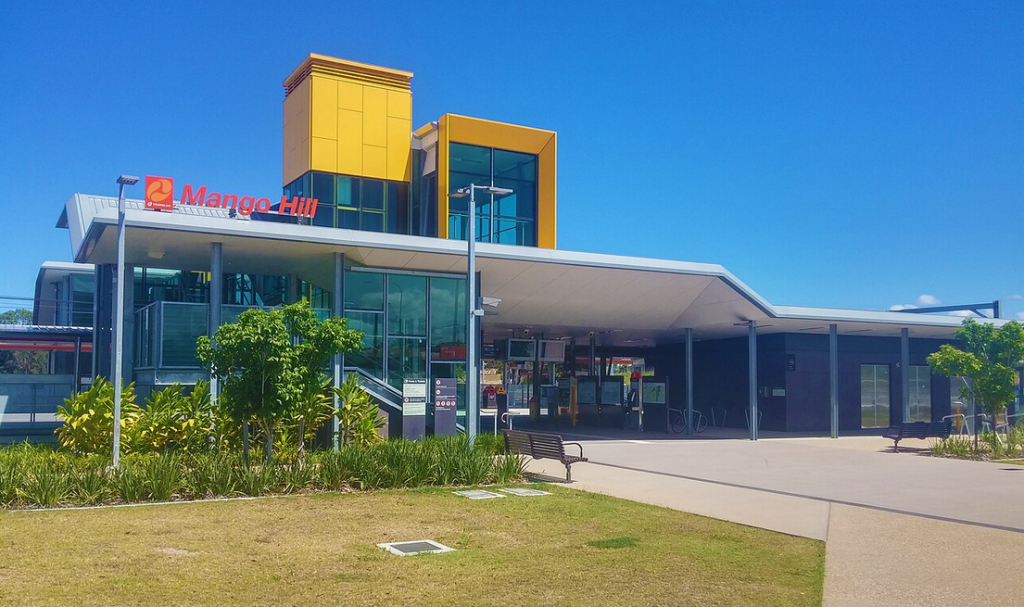

Recent sales across Mango Hill show strong demand for large family homes, with several properties pushing well beyond the $1.3 million mark in recent months.
Recent sales include:
- 36 Timbury Street — $1,630,000 — sold 4 Mar 2026
- 79 Mofflin Parade — $1,615,000 — sold 9 Mar 2026
- 129 Richard Road — $1,550,000 — sold 28 Jan 2026
- 6 Markwell Crescent — $1,550,000 — sold 19 Jan 2026
- 13 Essex Street — $1,515,000 — sold 11 Dec 2025
- 10 Pipit Close — $1,500,000 — sold 15 Dec 2025
- 46 Peridot Crescent — $1,390,000 — sold 23 Feb 2026
- 96 Stodart Terrace — $1,360,000 — sold 4 Dec 2025
- 36 Amaranthine Street — $1,355,000 — sold 5 Feb 2026
- 28 Whistler Street — $1,350,000 — sold 5 Feb 2026
Several of the top results highlight the premium buyers are currently willing to pay for large, modern homes in the suburb.
The highest sale in this group was 36 Timbury Street, a five-bedroom, two-bathroom home with four-car accommodation, which sold for $1.63 million through Leanne Brown.
Not far behind was 79 Mofflin Parade, a four-bedroom, three-bathroom property with a double garage, achieving $1.615 million through David Koepke of RE/MAX NOW.
There was a tie for the next highest price at $1.55 million. One of those properties, 129 Richard Road, is a five-bedroom, three-bathroom home with a double garage, with the listing linked to Antony Thompson. The other, 6 Markwell Crescent, is a four-bedroom, two-bathroom home with a double garage, sold by Ryan Suhle.
Two of these sales are located in Mango Hill’s Capestone area, roughly 1 to 1.5 kilometres from the train station, highlighting the continued demand for family homes in neighbourhoods that combine suburban living with convenient rail access and nearby North Lakes amenities.
Strong results across properties with four and five bedrooms also suggest Mango Hill continues to attract family buyers looking for larger homes in the northern Moreton Bay corridor, particularly in neighbourhoods close to schools, parks and transport links.
A Push for More Housing Choice
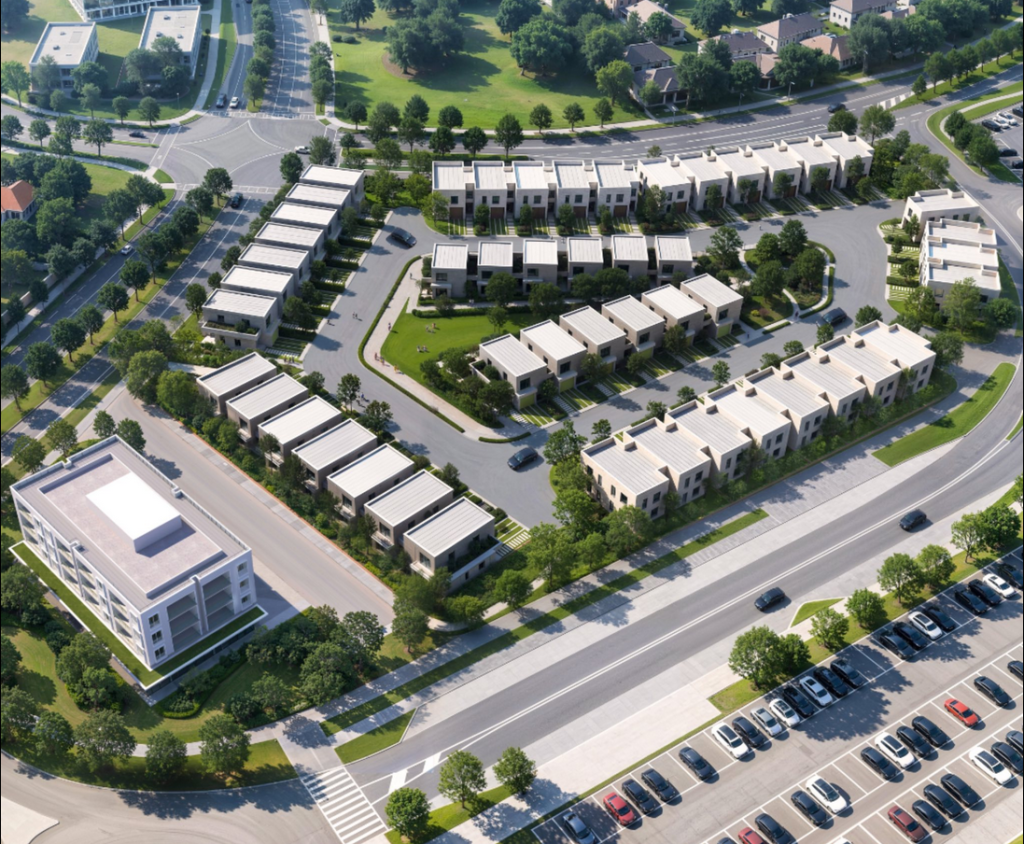
While the site could accommodate up to 250 homes, the final housing mix has not yet been determined.
Economic Development Queensland is currently seeking development partners through a market process, and the successful proponent will ultimately shape the design and dwelling mix.
Early planning guidance indicates the project may include medium-density housing, which can provide more homes on land already surrounded by infrastructure.
Potential housing outcomes being discussed include:
- homes suited to first-home buyers
- modest starter homes for young families
- medium-density housing designed for walkable neighbourhoods
- affordable housing for key workers

One section of the site, measuring 3,000 square metres, has already been earmarked for affordable housing aimed specifically at key workers.
The exact number of these homes will only be determined later in the planning process.
Living Beside the Train Station
The location of the site is central to the planning approach.
Developments built close to public transport are often referred to as transit-oriented development. The idea is to place housing near infrastructure that already exists, allowing residents to move easily between home, work and services.
In Mango Hill’s case, the train station provides direct rail access toward Brisbane while the surrounding suburb already includes schools, childcare centres, parks and nearby retail hubs.
By placing homes within metres of the station, planners aim to create a walkable neighbourhood where public transport becomes part of daily life.
Local Questions About Parking and Traffic
The proposal has also prompted discussion within the community about infrastructure capacity.
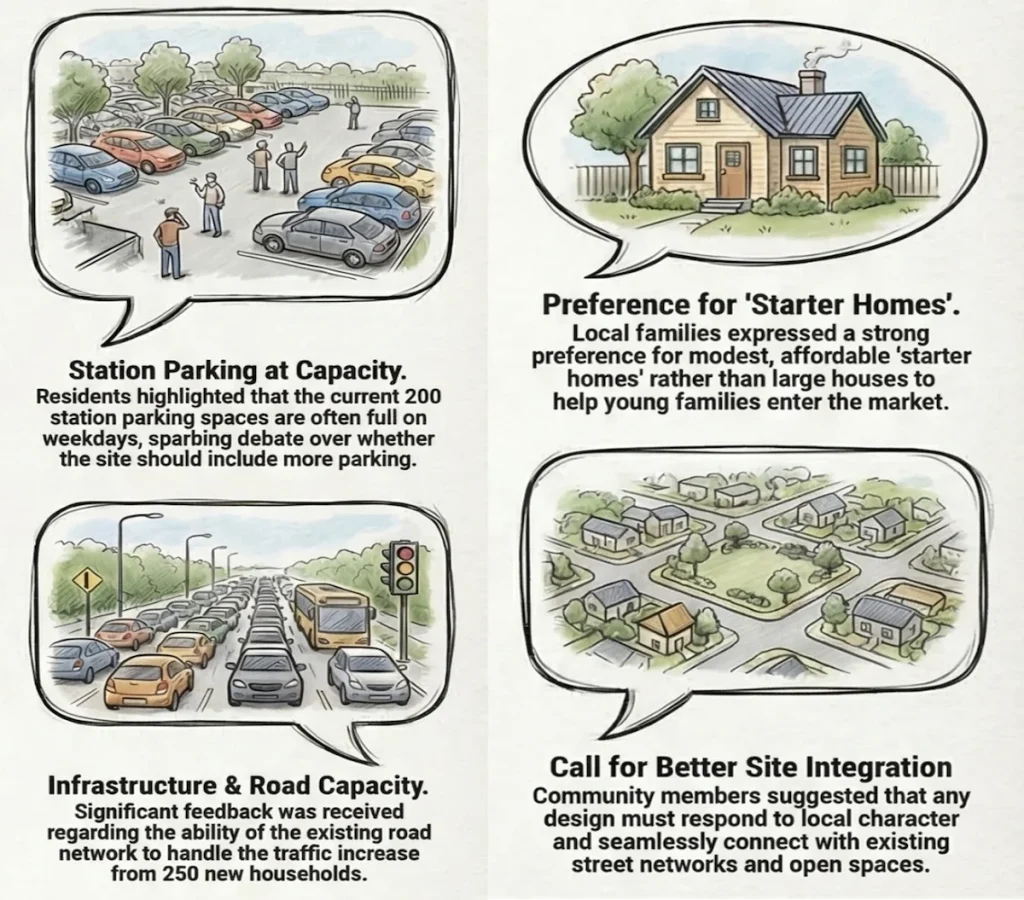
One frequently raised issue is parking at the station.
Mango Hill station currently provides around 200 parking spaces, and commuters say these spaces often reach capacity early on weekday mornings.
Some residents have suggested the land might have been better used for additional parking facilities, such as a multi-level car park.
However, the government has prioritised housing supply for the site.
During the development application process, the selected developer will be required to conduct traffic and transport assessments and demonstrate how the project integrates with the surrounding street network and the train station.
What Happens Next
The project is currently in the market process stage, with developers invited to submit proposals for the site.
This Request for Proposals process is scheduled to close on 2 April 2026.
After submissions are evaluated, Economic Development Queensland will select a preferred development partner.
Once a developer is chosen, the next step will involve lodging a formal development application with the City of Moreton Bay, where the final design, dwelling mix and infrastructure planning will be determined.
Community consultation will form part of that stage, allowing residents to review the proposed plans and provide feedback before construction proceeds.
A New Phase for Mango Hill
Over the past decade, Mango Hill has grown from a quiet suburb on the northern fringe of Brisbane into one of the fastest-growing communities in the Moreton Bay region.
Redeveloping the long-vacant land beside the train station represents an opportunity to strengthen the suburb’s transport connectivity while adding new housing options close to public transport.
For locals who have watched the empty block sit unchanged since the rail line opened, the transformation of the station precinct could mark the beginning of a new chapter for Mango Hill.
Published 12-March-2026
Featured Image credit: Facebook/JarrodBleijieMP
