How Banksia Beach Canals are Being Cleared for Safer Tides
Just after sunrise at Banksia Beach, the water is calm enough that the hum of a cutter-suction dredger carries across Pacific Harbour. It’s not a sound this community is used to, but it marks the beginning of a major effort by City of Moreton Bay: the removal of about 80,000 cubic metres of silt that has slowly crept into the canals.
For many locals, the project is less about machinery and numbers than about something much simpler—making sure tinnies, kayaks, and rescue vessels can get out on the tide without worry.
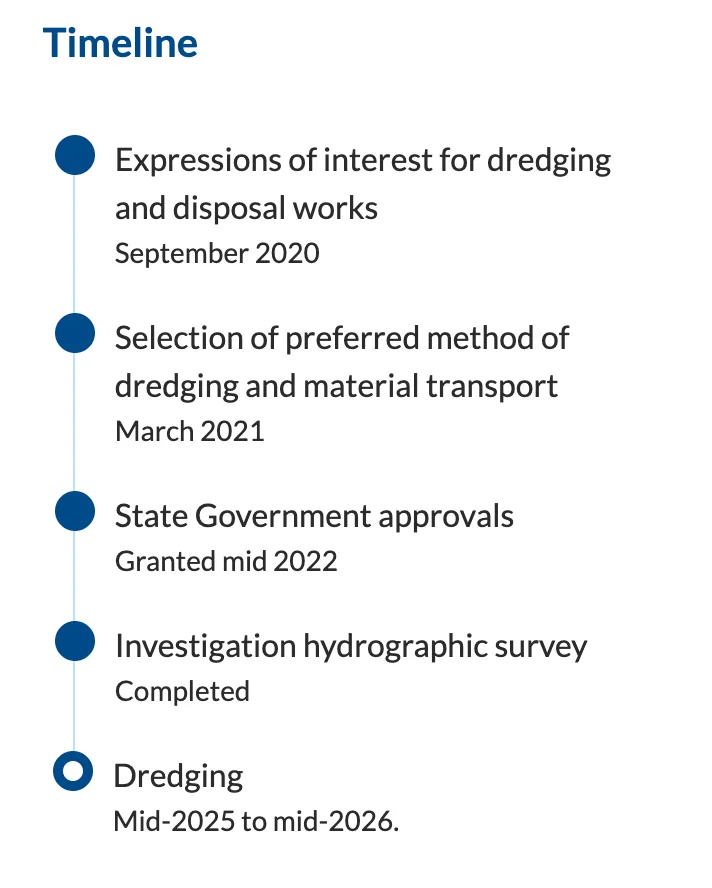
The dredging is scheduled to run for about eight months. On-water activity usually happens between 6:30 a.m. and 6:30 p.m. on weekdays, with occasional Saturdays if required. At the land-based end in Ningi, where the sediment is treated, crews are limited to 7:00 a.m. to 5:00 p.m., Monday to Saturday. These hours are meant to keep noise disruption in check.
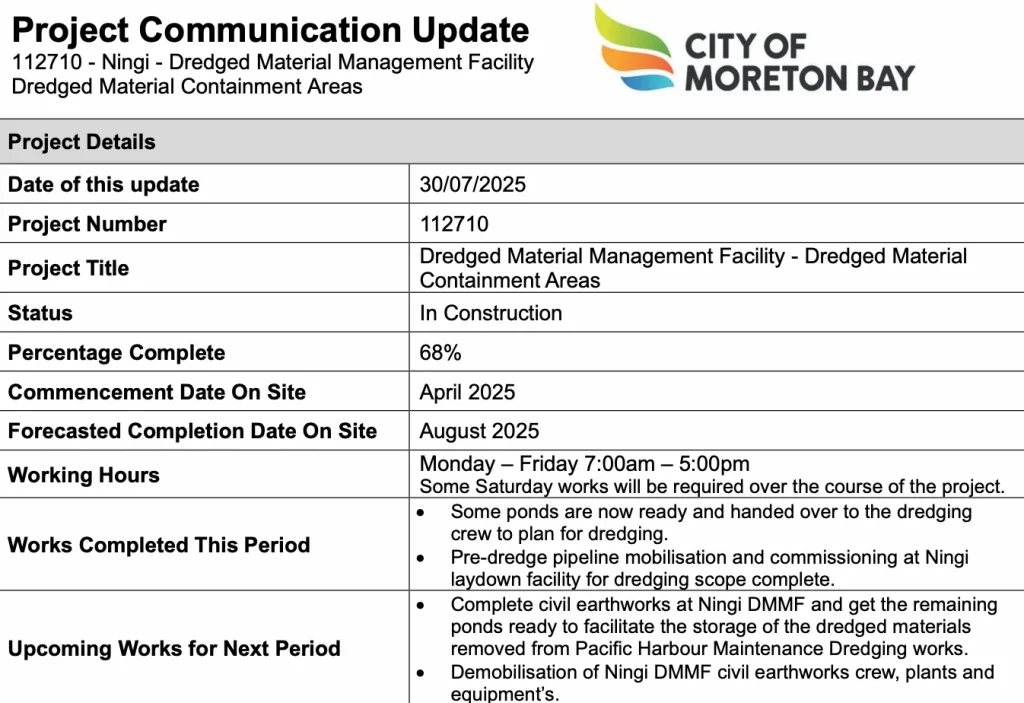
As of late July 2025, the Ningi Dredged Material Management Facility is 68 per cent complete. Several ponds are now ready and have been handed over to dredging crews to begin receiving material, while the pipeline mobilisation and commissioning at the Ningi laydown facility has been finalised.
Upcoming works focus on completing the remaining civil earthworks so all ponds can accept dredged sediment from Pacific Harbour, with the forecasted completion of the site set for August 2025.
Watching the canals change
For those living along the water, the project is something to watch day by day. The dredger moves slowly, pulling up clays and sands that have built up over years of wind, runoff and vessel wash.
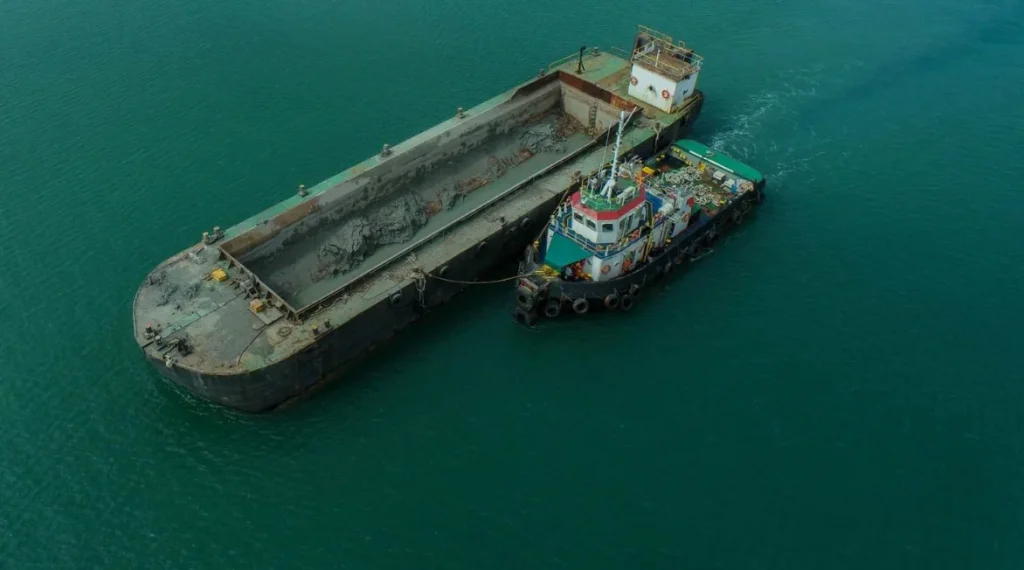
The changes can be subtle—an exposed sandbank one week, then gone the next. Council emphasises that strict environmental permits guide every move. That means caring for seagrass beds, safeguarding marine fauna, and navigation markers that shift as equipment advances, so locals know which routes remain open.
A temporary pipeline, mostly below the waterline, carries the dredged slurry seven kilometres across Pumicestone Passage and into Ningi Creek. To help the flow, three booster pumps are placed along the route.
Council documents say mufflers and noise barriers are in use, and exclusion zones are marked so boaties can steer clear. It is a strange sight—hoses arching over the water or disappearing beneath it—but for those who know what’s happening, it is the line that connects the canal clean-up to its final resting place.
Adjustments on shore
Life on land changes too.
The Turners Camp rest area is fenced off until the work is done, taking away a familiar stop for travellers and locals alike. At Kal Ma Kuta Drive Park, part of the carpark is cordoned off, and while the ramp remains open, contractors sometimes take it over to shift equipment.
Spinnaker Sound Marina also feels the effects, with temporary fencing and short closures of its ramp during critical phases in May and again near the project’s end in March 2026. These are inconveniences, but the City says signage and traffic control are in place to help residents plan.
Why the dredge matters
For a canal suburb like Banksia Beach, boating is not just a pastime—it’s part of daily life. Families rely on it for weekend outings, retirees for a quiet morning paddle, and emergency crews for fast response times. Sediment build-up has made navigation tricky, particularly at low tide, forcing some residents to wait hours before heading out.
Industry reports and Council briefings agree: restoring depth will mean fewer groundings, safer access for visitors, and peace of mind for those who count on clear channels.
Officials note that once this project is complete, Pacific Harbour should not need another major dredge for at least a decade, perhaps even two.