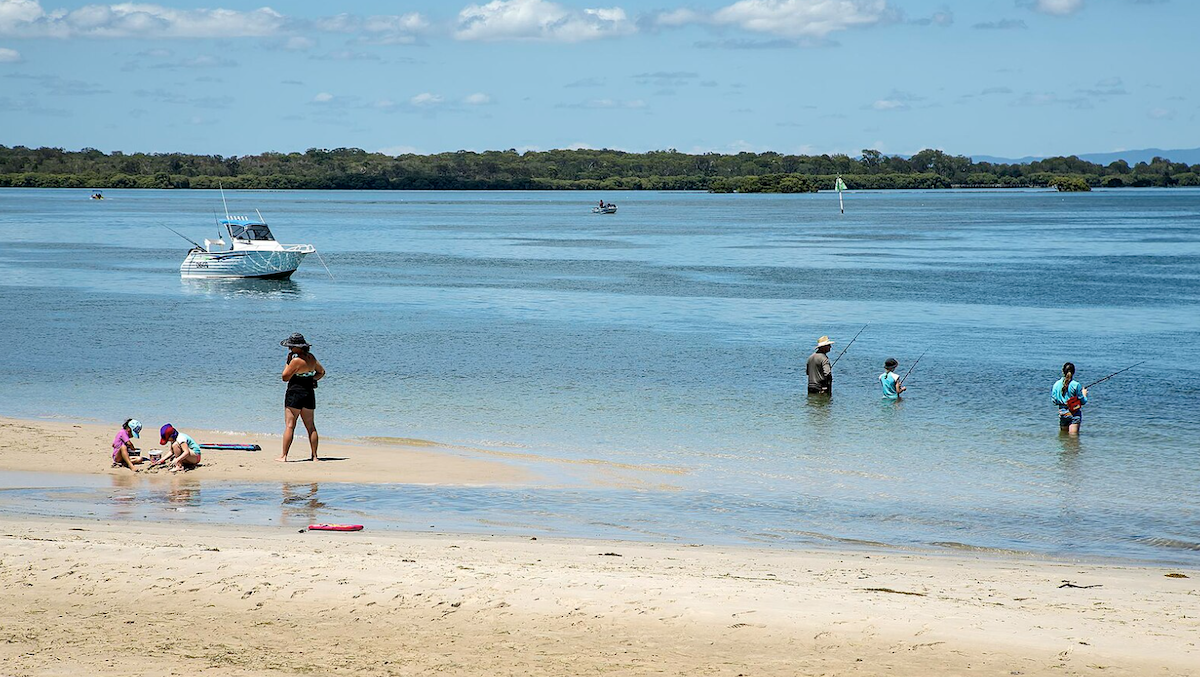

Canal Kids of Banksia Beach: Growing Up on Bribie’s Backyard Waterways
At 7:00 a.m. on a school day in Banksia Beach, two local siblings are already out the back, toes on the edge of the family pontoon. Their rods are rigged with small prawns, the canal is glassy, and a bream is nosing around the shadow of the boat hull. If they’re lucky, they’ll land two or three fish before breakfast – then race inside, wash their hands, and grab their school bags.
For kids who grow up on Bribie Island’s western shore, the canal isn’t a scenic backdrop. It’s the backyard.
Banksia Beach faces the sheltered waters of the Pumicestone Passage and Moreton Bay. It’s a quiet, residential suburb of canal estates, leafy streets and a golf course, where homes step down to jetties and pontoons instead of back fences. Families and retirees share the suburb with pelicans, passing dolphins, and a surprising variety of fish that slip in and out with the tides.
A Canal that’s Very Much Alive
On a still morning, the canals can look calm from the footpath, but under the surface, they’re busy. Locals talk about them as a “mini-ecosystem” tucked off the main waterway, with baitfish flicking under pontoons and bigger predators lurking in the deeper bends. Those canals link straight out to the 35-kilometre-long Pumicestone Passage, the narrow channel that separates Bribie Island from the mainland and feeds the suburb’s waterways with tides, nutrients and marine life.
Talk to people who’ve lived here a while, and a rough species list quickly appears.
- Bream – the bread-and-butter catch, nosing around boat hulls, pylons and shaded corners.
- Flathead – lying in the sandy gutters where the canals meet the broader Passage, especially active after rain and on a falling tide.
- Moses perch and estuary cod – hard little fighters around rock edges and under pontoons.
- Whiting – slipping over shallow sandy edges at dawn and dusk in summer.
- And under the crab pots: mud crabs, marching after fresh flow from upstream creeks.
Every now and then, someone hooks a shovel-nose shark. It’s released carefully, but not before it becomes the talk of the street.
It’s a world that many Banksia Beach kids know by feel.
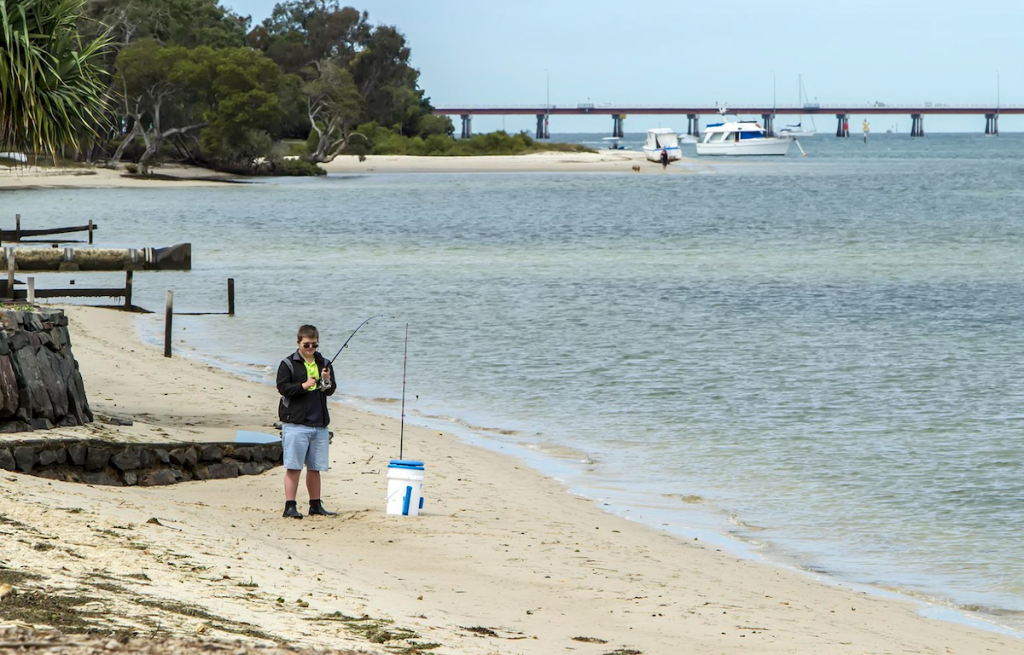
Local families talk about parents setting kids up with small rods and little prawns on the hooks; on a good morning, they might catch three bream before breakfast. Older cousins and grandparents often step in to help land and fillet flathead – there’s usually one relative who’s known as “the best with a knife” when it comes to turning a big flatty into neat, boneless portions.
Younger children keep their rods by the back door, ready for the first break in the weather. Many say they love chasing whiting because they’re “fast” and “cheeky”, even if house rules mean no fishing from the lounge when it’s raining.
Together, these small stories sketch a picture of a suburb where sea air and line tangles are just part of growing up.
.jpg)
Everyday Life on the Water
With a population a little over 7,000, Banksia Beach is big enough to have its own primary school, parks and shopping options, but small enough that people still nod to each other along Solander Esplanade. Families can wander down to Banksia Beach Park, a large waterfront reserve with a playground, barbecues and a basketball half-court, or spread a picnic blanket under the trees and watch the tide slide past.
But it’s behind the houses, in the canals, where the suburb’s personality really shows.
In many streets, rods sit by sliding doors, bait lives in the freezer beside the ice-blocks, and a crab pot or two leans against the side fence waiting for the next run of muddies. After school, kids drift out along the pontoons while parents start dinner or wander down with a cuppa to see what’s biting.
The water shapes the rhythms of life:
- Dawn and dusk bring more baitfish, and with them bream, whiting and the odd trevally.
- Top of the tide sees fish push in under pontoons and hulls in search of food.
- After rain, when the Passage and creeks have flushed, flathead and bream seem to switch on.
- On hot, still evenings, tiny garfish and whiting often circle in the glow of canal lights, flicking at the surface while kids toss unweighted baits into the dark.
For beginners, locals suggest keeping things simple: frozen prawns, small hooks, light line and perhaps a packet of soft plastic grubs or a small hardbody lure in a green-and-gold pattern. The rest is a matter of patience, tide timing and learning the snags the hard way.
A Lifestyle that Feels a Little Old-School
Part of Banksia Beach’s appeal is that it still feels a bit like the classic coastal town people remember from holidays – just with better coffee and Wi-Fi. Suburb profiles routinely mention the “serene waterfront views”, “relaxed lifestyle” and mix of families and retirees who choose the area for its easy access to fishing, boating and the golf course.
Sit on a back deck here and you’ll see why.
Neighbours wave from kayaks as they paddle past. Someone tows the tinny out towards the Passage to chase a feed. A lone walker follows the path along the esplanade to where Banksia Beach looks across to the Glass House Mountains and mainland parks – a favourite spot for picnics, boat launches and easy, land-based fishing.
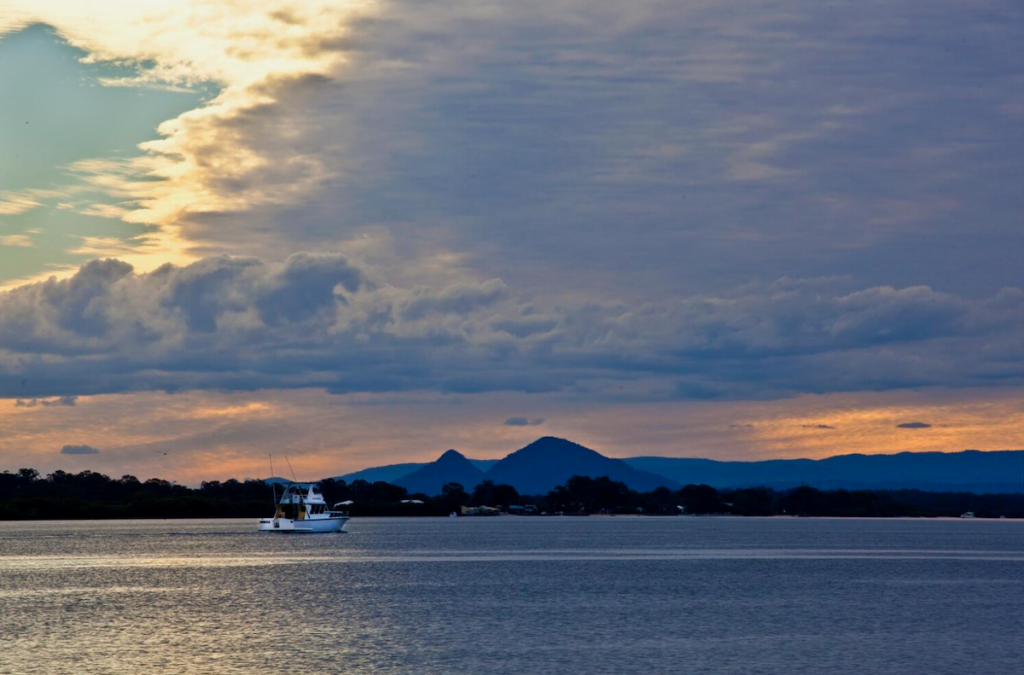
Photo Credit: Wikimedia Commons/Creative Commons Attribution-Share Alike 2.0 Generic

For canal-front families, there’s a sense that children are getting something rare: a slow, water-based childhood where they learn to read tides, handle a landing net and understand where their dinner came from.
It’s also a chance to quietly pass on lessons about caring for the waterways. Parents and grandparents teach kids about size and bag limits, how to release undersized or unwanted fish gently, and why crab pots need to be checked regularly and labelled properly. These are small, everyday acts, but they add up in a suburb that sits right on the edge of a sensitive marine passage.
More Than a Pretty View
For people browsing property listings, canal homes are easy to spot: gleaming aerial photos, sweeping bends of blue water and neat pontoons lined up like jetties on a postcard. But talk to locals and you’ll quickly discover that the real story isn’t just about a view.
It’s about:
- kids comparing their first bream at school the next day,
- Nannas who can fillet a flathead in a handful of careful strokes,
- neighbours swapping a few crabs for herbs from the garden,
- and families timing their dinner around “one last cast” at 6:00 p.m. when the light fades and the canal comes alive.
These are the little rituals that turn a canal estate into a community.
“Everyone remembers their first fish in the canals,” one long-time resident says. “It’s a rite of passage here.”
In Banksia Beach, the canals aren’t just man-made waterways. They’re living classrooms, shared backyards and the setting for memories that last long after the kids have outgrown their school uniforms – but never quite outgrow their love of the tide.